THE SHORT ANSWER
Condensation on the room-facing surface of a new window does not automatically mean the window is defective. Moist indoor air can condense on glass that is cold enough. First establish exactly where the moisture is, then compare indoor humidity, weather and room conditions. Persistent wetting still deserves attention because it can damage nearby finishes even when the glass itself is functioning.
Locate the moisture before explaining it
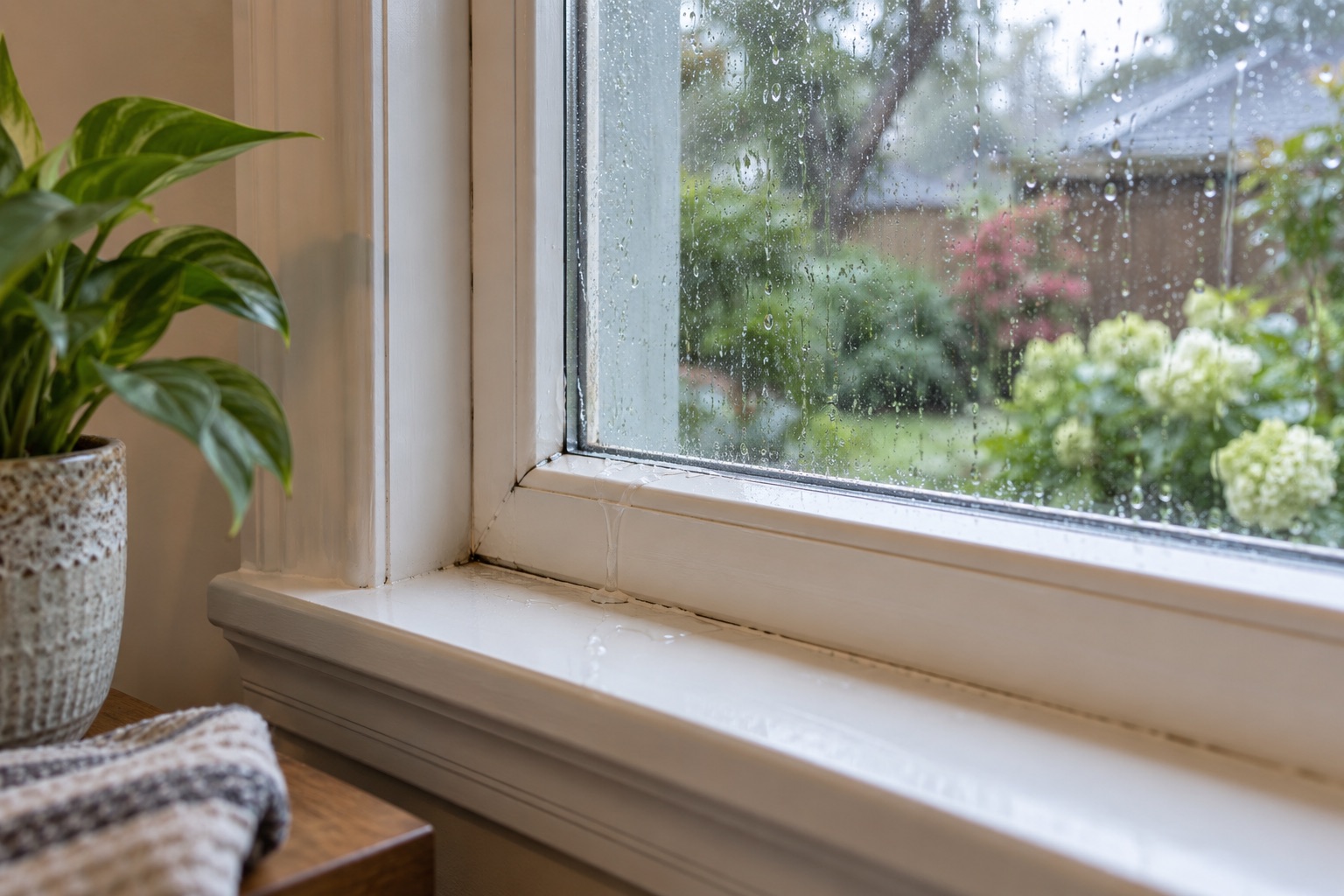
There are three importantly different locations: the room-side surface, the outdoor surface and the space between sealed panes. Safely wiping an accessible interior surface can help identify the first case. Do not lean outside or dismantle the sash to investigate the others. Photograph the appearance and note which surface you can actually reach.
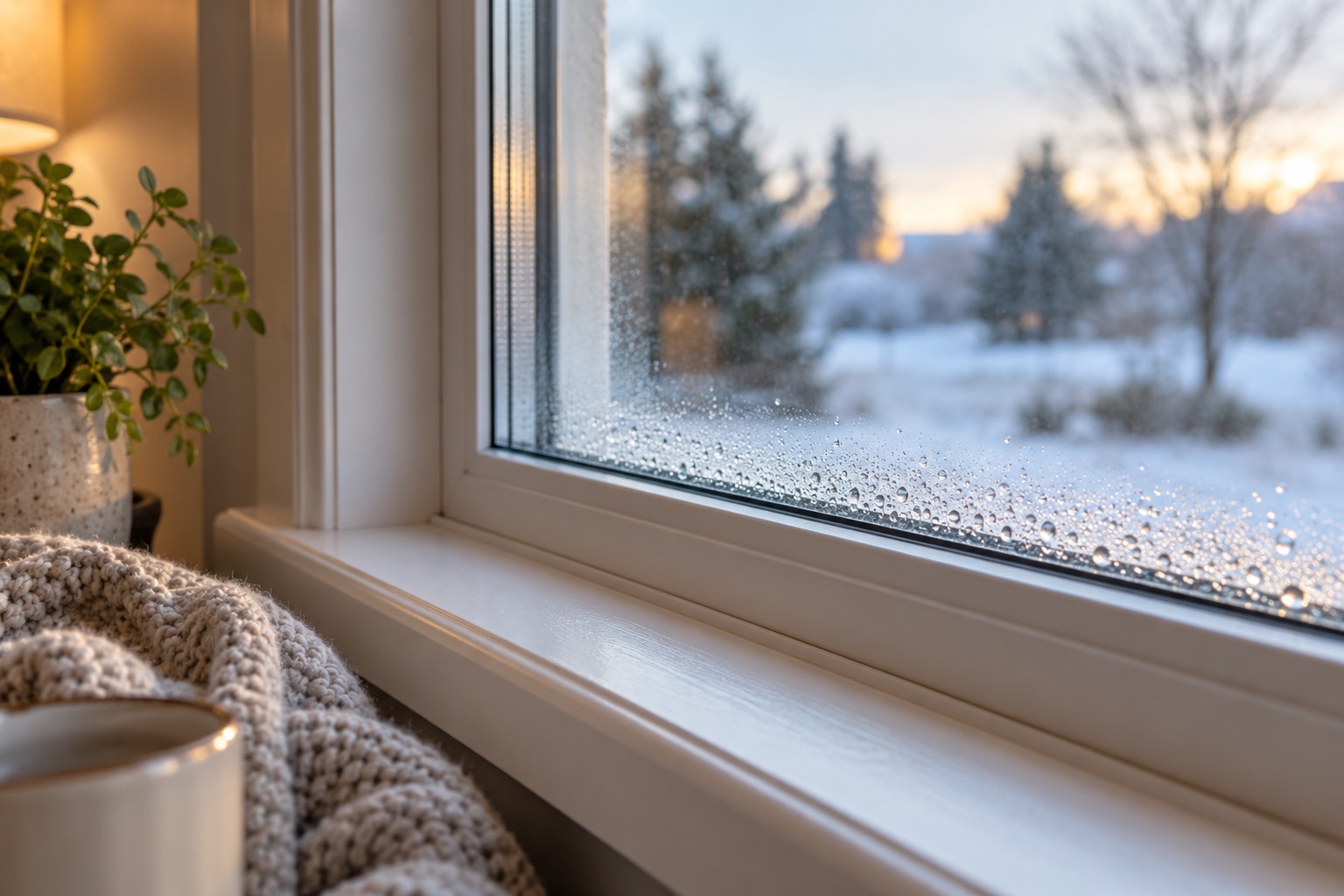
One researched owner of new windows reported moisture along the interior lower edge during very cold weather. Another saw different amounts of exterior condensation on neighboring windows. Those are not equivalent complaints, although both are often called foggy windows. Describe the location accurately when contacting the installer. It prevents a discussion of glass replacement from beginning before anyone has established whether the sealed glass cavity is affected.
Understand the cold-surface relationship
Condensation forms when the conditions at a surface allow water vapor to become liquid. The relevant relationship involves indoor moisture and surface temperature, not just whether the thermostat reports a comfortable room. Glass edges, frames and sheltered corners can be colder than the room air. Outdoor weather and the window's construction affect those surface temperatures.
Andersen's interior-condensation explanation distinguishes room-side moisture from a failure of the insulating glass. That distinction does not mean every wet window should be ignored. A persistent pattern may expose a need to address humidity, air circulation, a cold installation detail or a separate leak. The explanation is a starting point for diagnosis, not an automatic rejection of every warranty or workmanship concern.
Collect a small set of useful observations
Record indoor temperature and relative humidity near the affected room using a suitable instrument, along with outdoor conditions and time of day. Note whether the moisture follows showering, cooking, overnight occupancy or unusually cold weather. Compare affected and unaffected windows while recognizing that orientation and shading differ. A single room humidity measurement cannot represent every cold edge in the house.
Photograph blinds or curtains as they were when the moisture appeared. Closed coverings and furniture can alter air movement near the glass. Record recent changes such as new windows, weatherstripping or exhaust-fan repairs. These observations give the installer or building professional a better basis for assessment than the statement that the window is new and therefore should never become wet.
Review indoor moisture sources and exhaust
Bathing, cooking, laundry, indoor drying and humidifiers can affect indoor moisture. Check whether local exhaust equipment actually sends air outdoors and is used as intended. A fan that makes noise is not proof of adequate delivered airflow. If humidity remains persistently high, a broader ventilation or HVAC assessment may be more useful than replacing another window.
Avoid assuming that new windows should deliberately leak air to prevent condensation. Uncontrolled drafts and designed ventilation serve different purposes. The EPA mold and moisture guide connects prevention with managing moisture sources and wet conditions. Apply that principle to the room as a whole: removing moisture at its source can be more effective than repeatedly wiping the coldest surface where it becomes visible.
Consider the specific window and installation
Request the actual product identification, glass configuration and installation records. Ask the service representative to distinguish glass behavior from frame, seal and rough-opening conditions. If one opening behaves very differently under comparable conditions, it deserves a focused comparison rather than a general statement that all condensation is normal or all condensation indicates failure.
Cold air leakage, missing air sealing and unusual installation conditions can influence surface temperatures. A qualified inspection may use several observations or instruments to investigate them, but a thermal image alone does not prove the cause. Ask what evidence supports each conclusion and what remains inaccessible. A product warranty and an installation warranty may cover different matters, making clear diagnosis useful even before responsibility is discussed.
Keep between-pane fogging separate
Andersen's broader condensation guide distinguishes surface moisture from condensation between insulating-glass panes. If the fog cannot be removed from either accessible surface and is located inside the sealed cavity, the service path may involve the glass unit or sash. That is a different problem from moisture on the room-facing glass, and the appropriate remedy depends on the product.
For a hypothetical example, two windows may look cloudy in the morning. One clears when its room-side glass is wiped; the other remains hazy inside the cavity. Buying a dehumidifier may help the first room if moisture is excessive, but it will not restore the second unit's seal. Conversely, replacing sealed glass does not address a high indoor moisture load.
Prevent repeated wetting while the cause is assessed
Remove accessible surface water and protect susceptible finishes without obstructing the window's intended drainage or operation. Follow manufacturer cleaning and maintenance directions. Do not seal unfamiliar openings or apply films that the manufacturer has not approved for the product. Such changes can introduce other performance or warranty questions before the original issue is resolved.
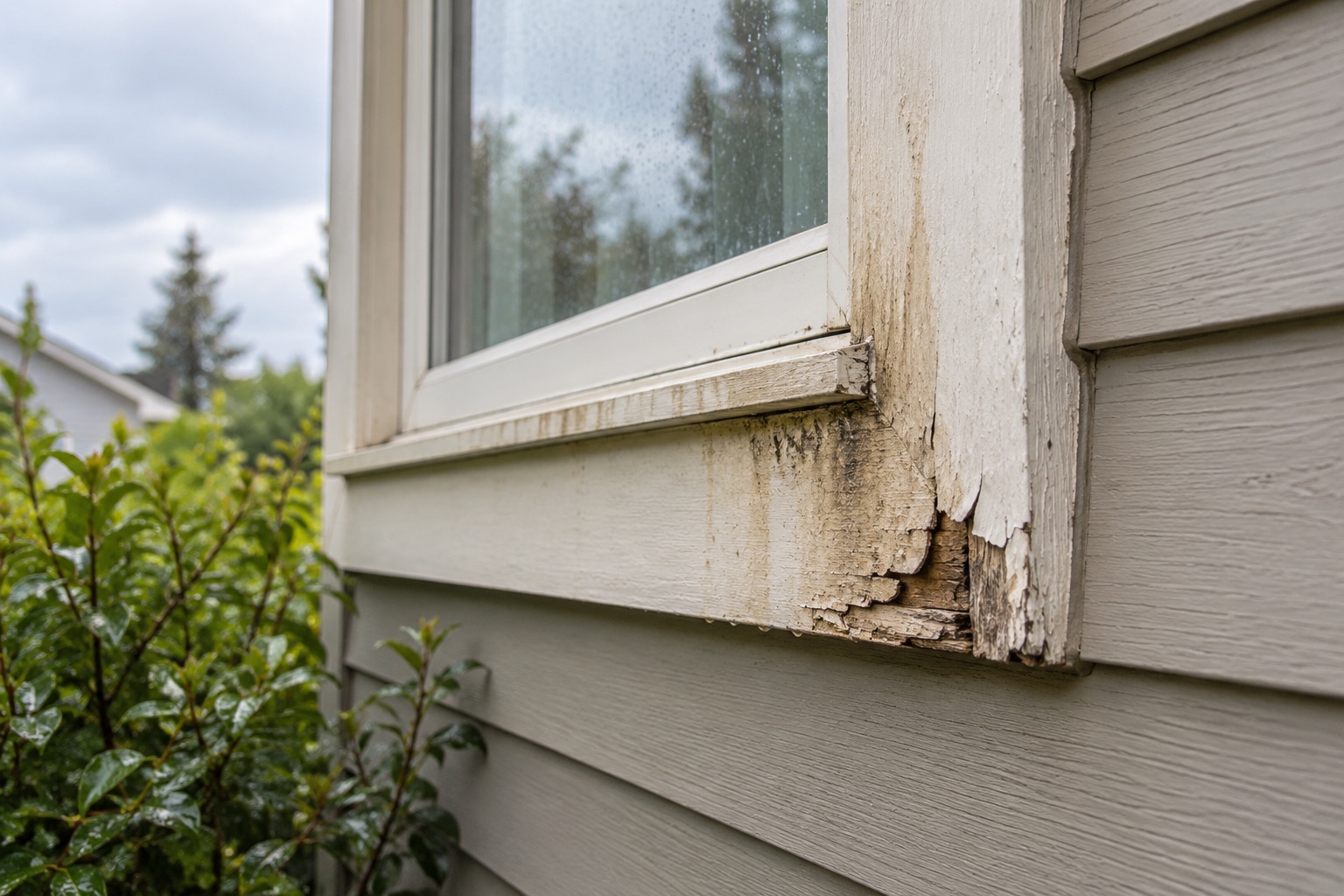
Watch adjacent wood, paint and wall finishes for recurring damage. If material stays wet or growth appears, include that condition in the assessment rather than treating the glass as the only affected component. The goal is not merely a clearer view. It is keeping the surrounding assembly appropriately dry while establishing whether humidity management, product service or installation work is needed.
Judge improvement under comparable conditions
Compare observations after changes using similar weather and room-use conditions where practical. If a humidifier setting, exhaust arrangement or covering is changed, record it. That makes the result interpretable. A dry window during warmer weather does not prove the original winter condition was corrected, and one cold morning does not establish a permanent defect.
Keep the service findings with product records. Ask what seasonal behavior is expected for the actual window and what recurrence should prompt another visit. A useful conclusion identifies the moisture location, the likely mechanism and any unresolved uncertainty. That is more actionable than a blanket statement that condensation is either always harmless or always evidence of a bad installation.
BEFORE YOU PROCEED
Your project checklist
- Identify room-side, exterior or between-pane moisture.
- Record temperature, humidity, weather and recent room activity.
- Note coverings and air movement near affected windows.
- Verify moisture-source exhaust and humidifier operation.
- Obtain product-specific service findings if behavior is unusual.
- Compare improvement under relevant seasonal conditions.
Questions that come up next
Can good new windows still get interior condensation?
Yes. Room-side condensation depends on indoor moisture and glass surface temperature. Persistent wetting should still be assessed so surrounding finishes remain dry and any contributing defect is identified.
Should I lower indoor humidity to one fixed number?
A single number does not fit every climate, season and assembly. Use appropriate guidance and professional assessment where needed, considering both comfort and the temperatures of vulnerable surfaces.
EVIDENCE & SCOPE
Sources for this guide
Applies to: United States homeowner education. Climate, existing assembly, manufacturer instructions and locally adopted requirements govern project details; no nationwide code threshold is asserted.
Reddit discussions identify questions and experiences, not verified diagnoses or code requirements. Technical claims should be read with the linked primary source, product instructions and local requirements.
- Condensation on the Interior of Window or Patio Door Glassmanufacturer
Interior condensation versus insulating-glass seal failure; humidity and surface temperature.
- A Brief Guide to Mold, Moisture and Your Homegovernment
Moisture-source correction, porous materials, professional cleanup decisions and completion criteria.
- Condensation on windows: What causes it and how to manage itmanufacturer
Distinguishes indoor, outdoor and between-pane condensation.
- Interior Condensation on New Windows?reddit
An anonymized homeowner question that informed the article. Retrieved through search excerpts; anecdotal evidence, not a technical diagnosis.
- New windows installed. some have condensation, some don'treddit
An anonymized homeowner question that informed the article. Retrieved through search excerpts; anecdotal evidence, not a technical diagnosis.