
THE SHORT ANSWER
Fresh finishes can make a house easier to sell, but they do not establish that an underlying leak, movement or installation problem was corrected. Look for inconsistencies that justify questions, request the work history and use an independent inspection with specialist follow-up where needed. A suspicious patch is evidence of a patch, not proof of fraud. Preserve observations and avoid destructive or hazardous investigation without appropriate permission and expertise.
Treat cosmetic changes as a starting point for inquiry
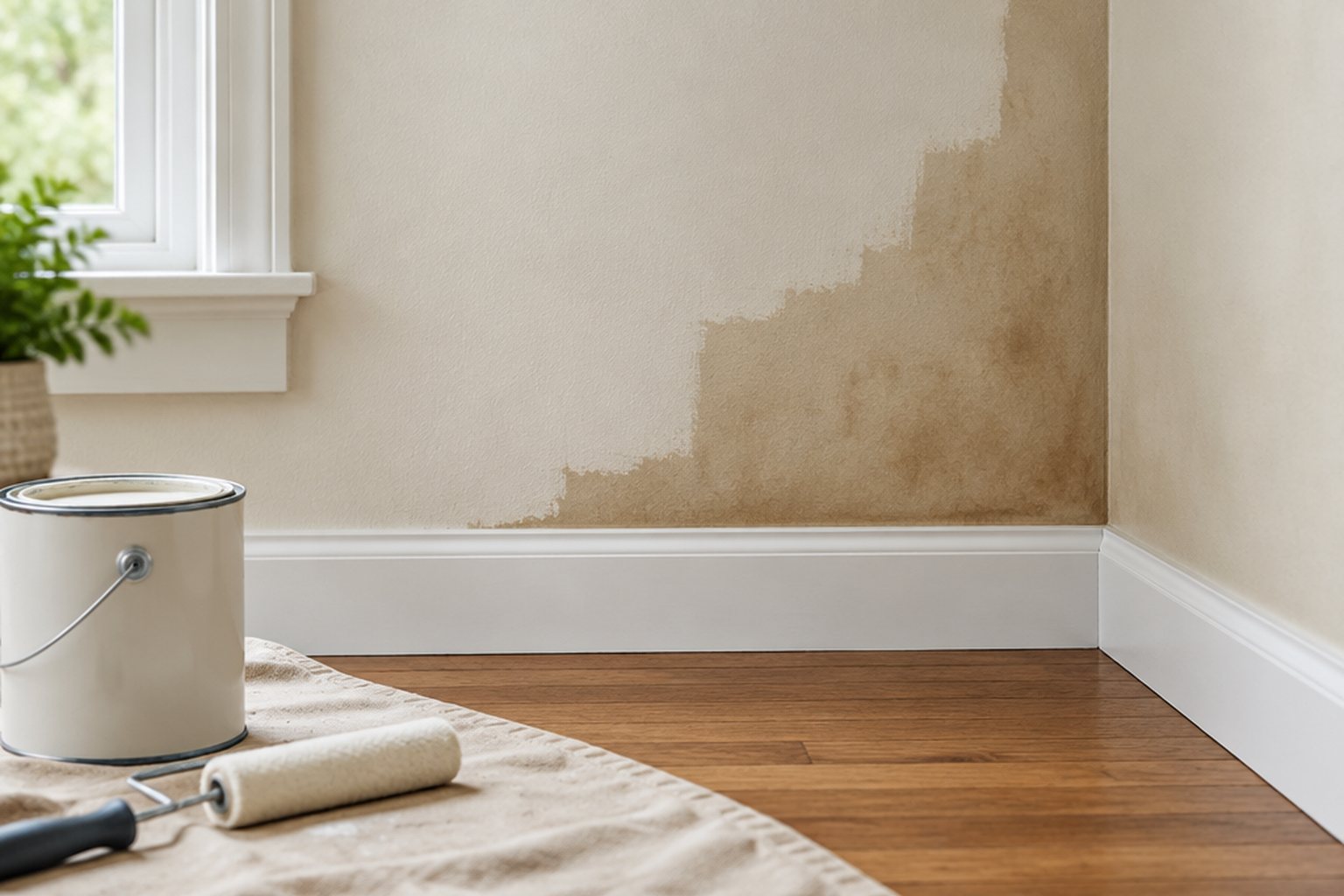
A newly painted wall, replaced floor section or fresh trim can result from routine decorating, ordinary repair or an effort to conceal a problem. Appearance alone rarely establishes which explanation is correct. Ask when the work occurred, why it was done and what investigation or repair preceded the finish. Record the answer alongside the location and photographs. Keep your language factual rather than accusing the seller of concealment before the evidence supports it. The researched discussions describe buyers who worried that an attractive finish hid expensive defects; the practical response is a structured inquiry that tests the explanation instead of either trusting or condemning the finish automatically.
Look for relationships among symptoms
A single mark may be ambiguous, while several related observations can identify a useful investigation area. For example, discoloration near a fixture, a reported past leak and recently replaced adjacent material may justify moisture evaluation. Do not assume that a stain's color or shape identifies the source. Ask the inspector to explain what is observable and which conditions could account for it. Seasonal or intermittent problems may not be active during a short visit. Note weather and operating conditions where relevant. The objective is to help a qualified evaluator ask a focused question, not to create a homeowner diagnostic method that declares hidden damage from superficial clues.
Use inspection time to resolve the highest-consequence questions
The CFPB's home-inspection guidance recommends independent inspection and sufficient time for follow-up. Tell the inspector about recent finishes and the seller's explanation, and read the scope and limitations of the service. If a concern involves structural movement, electrical safety, moisture or another specialty, ask whether an appropriate specialist should evaluate it. Stay within the purchase contract's actual timing and access arrangements. A routine walkthrough may not reproduce a leak or reveal an inaccessible assembly. Those limitations should remain visible in your decision rather than being translated into a guarantee that no problem exists because none was confirmed that day.
Ask whether the underlying cause was addressed
The EPA's remodeling and indoor-air-quality guidance emphasizes addressing underlying problems and planning work around pollutant and moisture concerns. A finish repair can improve appearance while leaving the original water source or other cause unresolved. Request records explaining the investigation, the repair performed and any subsequent observation. A receipt for stain-blocking paint answers a different question from documentation of a repaired leak. Avoid assuming that every remediation label proves complete success. Ask what was evaluated, what was corrected and what remains uncertain. Where the stakes justify it, have the relevant professional review the evidence and current condition rather than relying only on marketing terms.
Compare disclosure answers with the known history
In South Carolina, the official property condition disclosure form organizes seller knowledge and permits explanations and attachments. Read it with the inspection report and any repair records. If the form appears inconsistent with a seller statement or documented event, request a specific explanation through the transaction process. A no-representation response does not mean the condition was inspected and found satisfactory. At the same time, a defect discovered later does not automatically prove the seller knew about it earlier. The legal significance of knowledge, timing, exceptions and statements requires fact-specific advice. Keep the inquiry focused on obtaining accurate information before making the purchase decision.
Preserve evidence without creating additional damage
Take permitted photographs of accessible conditions and save the listing, disclosures, written answers and reports. Do not peel finishes, move heavy appliances, open electrical equipment or remove suspect materials without authorization and qualified guidance. Older painted or fibrous materials may create additional hazards when disturbed. If a specialist recommends access, agree on its purpose, method and restoration responsibilities through the appropriate parties. Preserve original files and dates rather than editing images to make a symptom look more dramatic. An accurate record supports evaluation and negotiation; exaggerated presentation can obscure the actual condition and weaken an otherwise reasonable request for further investigation.
Evaluate the explanation and the remaining uncertainty
A plausible explanation should connect the original symptom, investigation, repair scope and current result. Missing documentation does not always mean the explanation is false, but it may leave uncertainty that matters to the purchase. Estimate the consequence of being wrong rather than relying only on the visible size of the patch. Obtain appropriate assessments or repair proposals where justified, including their assumptions and exclusions. Discuss available negotiation or investigation options with your transaction advisers. Do not assume you can compel destructive testing or cancel without consequence outside the agreement's rights. The decision should account for both known findings and the questions that could not be resolved.
Define any agreed repair in terms of the problem
If the transaction includes repairs, describe the condition to be evaluated and the intended result rather than merely specifying a new coat of paint. Identify qualified personnel, permits where required, supporting records and an appropriate completion review. In a hypothetical ceiling-stain dispute, repainting may be part of restoration after the source is addressed, but it should not silently replace the investigation the buyer expected. Keep the final scope in writing and verify it through the agreed process. Defensive due diligence seeks evidence and correction. It does not teach sellers how to make defects harder to notice or promise buyers that every concealed problem can be discovered before closing.
BEFORE YOU PROCEED
Your project checklist
- Ask why and when suspicious finish work occurred.
- Connect observations to focused professional questions.
- Allow time for independent inspection and follow-up.
- Request evidence that the underlying cause was addressed.
- Compare disclosures with documented history.
- Define negotiated repairs beyond cosmetic restoration.
Questions that come up next
Does fresh paint prove a seller hid water damage?
No. Ask about the history and seek appropriate assessment. Fresh paint alone does not establish the cause, seller knowledge or intent.
Can I remove finishes during an inspection?
Only through appropriate permission and a suitable professional plan. Routine access rights do not automatically authorize destructive or hazardous investigation.
EVIDENCE & SCOPE
Sources for this guide
Applies to: US inspection planning; South Carolina disclosure example.
Reddit discussions identify questions and experiences, not verified diagnoses or code requirements. Technical claims should be read with the linked primary source, product instructions and local requirements.
- CFPB: Schedule a home inspectiongovernment
Federal home-buying guidance on independent inspection, specialist follow-up and the distinction between inspection and appraisal.
- EPA: Best Practices for Indoor Air Quality when Remodeling Your Homegovernment
EPA remodeling guidance on indoor air quality, underlying moisture problems, work separation, ventilation and hazardous-material considerations.
- South Carolina Residential Property Condition Disclosure Statementgovernment
Official South Carolina property disclosure form, June 2025 file, with instructions on knowledge, explanations, inspections and statutory exceptions.
- Can a seller hide a plumbing problem/water damage?reddit
Buyer worries about concealed damage from a known shower leak and confuses appraisal with inspection. Only a search excerpt was available during research. Individual experiences are not legal or technical authority.
- Flipper Disclosurereddit
A supposedly updated flip has serious concealed plumbing and electrical defects found during inspection. Full thread was available during research. Individual experiences are not legal or technical authority.