THE SHORT ANSWER
Some engineered hardwood can be sanded; some is better suited to a maintenance coat or selective replacement. The decision depends on the remaining wood layer, floor shape, texture, finish compatibility and previous work. A nominal wear-layer measurement is useful, but it is not a complete refinishing assessment or a guarantee of a certain number of future sandings.
Start with what you want to change
Faded sheen, small finish scratches, deep gouges, dark staining and an unwanted brushed texture are different problems. A maintenance coat can renew a compatible finish without removing the same amount of wood as full sanding, but it cannot erase every defect. Write down whether the goal is protection, color change, texture change or removal of damaged material.
The homeowner discussion behind this article involved a thin, wire-brushed engineered floor that the owner wanted to smooth and strengthen. That combines two separate expectations: changing the profile and renewing the coating. A proposal that addresses only the finish might leave the disliked texture intact. Before comparing quotes, make sure every contractor is pricing the same outcome and has explained which existing marks and contours would remain.
Confirm that the surface is real wood
Find the product invoice, carton label or installation record. Flooring appearance can be misleading, especially in a home purchased with existing surfaces. A printed decorative layer on a resilient or laminate product is not treated like the wood surface of an engineered plank. Do not authorize sanding simply because a seller described the floor as hardwood.
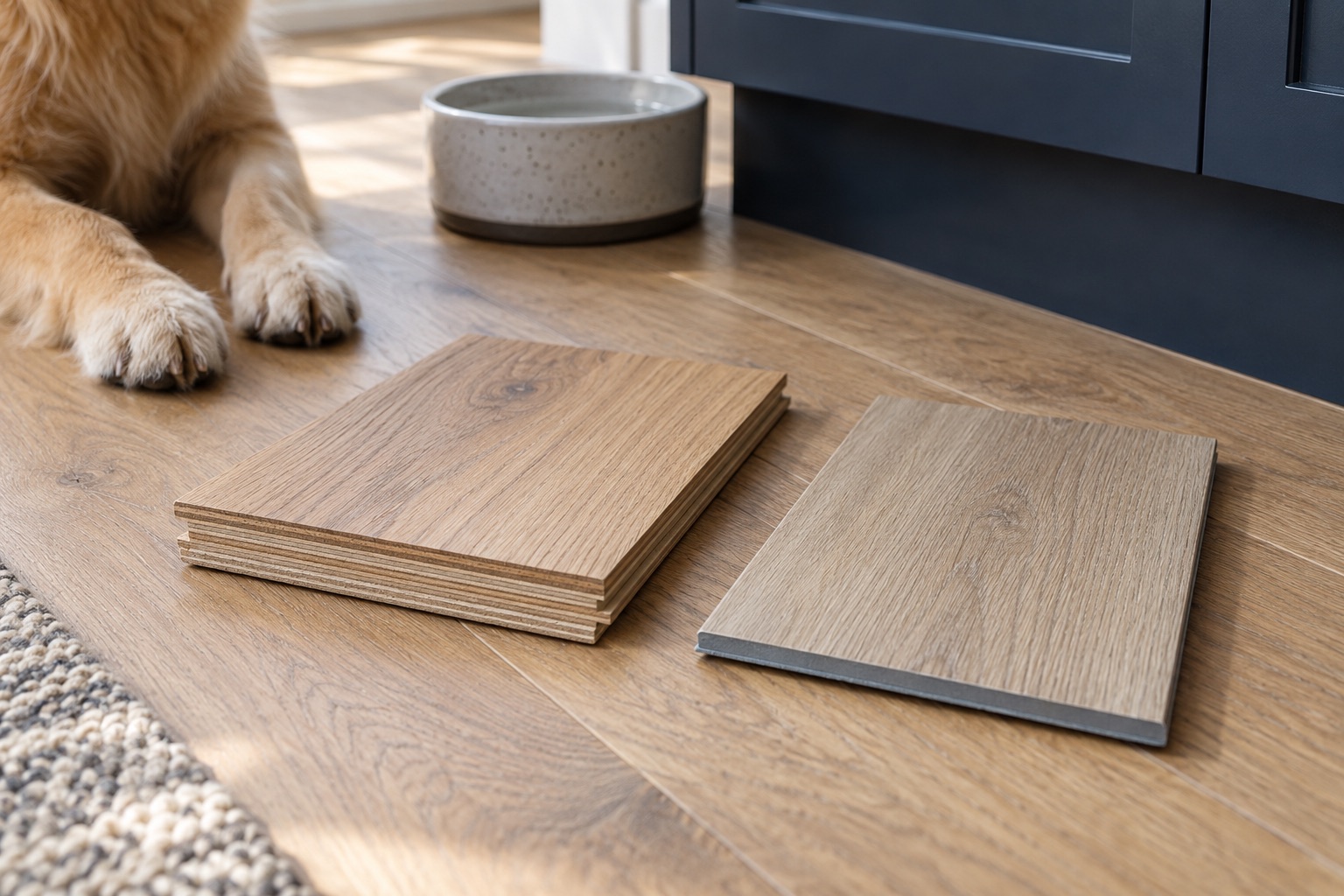
The NWFA overview of wood-floor types explains the basic distinction between solid and engineered construction. Within engineered flooring, the top layer and underlying arrangement vary. Record the product name, dimensions, original finish and installation method. A spare piece or safely visible edge can help a qualified refinisher identify construction. Avoid removing a transition or cutting an installed board solely to obtain a measurement before the evaluator decides what evidence is necessary.
Measure remaining material, not just original specifications
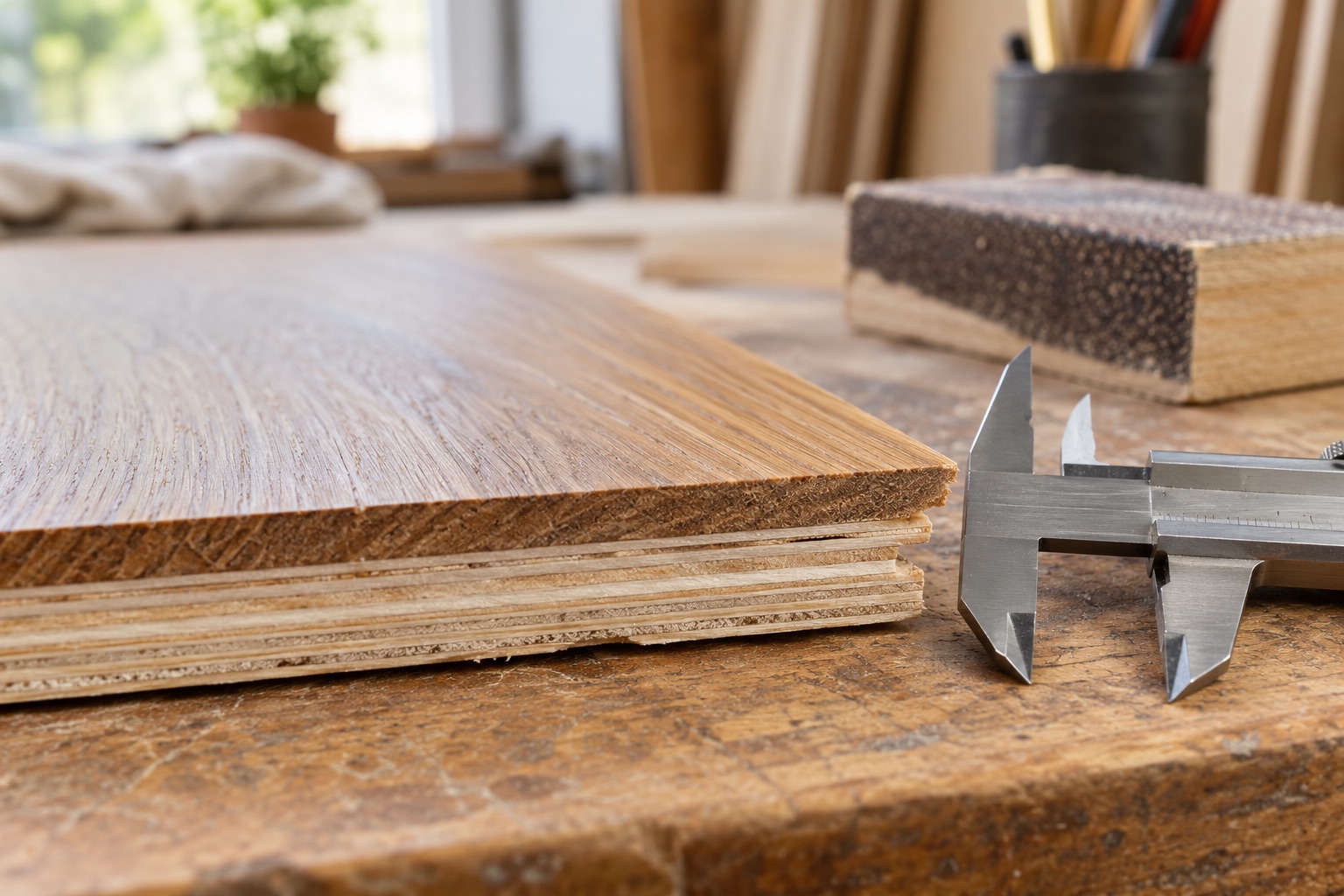
A manufacturer's original wear-layer specification describes the new product. Previous sanding, wear, deep scratches and local high spots can reduce what remains. The floor may also have bevels or a textured surface that require additional removal if the owner wants them flattened. A nominally suitable product can therefore be unsuitable for a particular requested transformation.
NWFA's refinishing guidance identifies wear-layer thickness, floor condition, flatness and the sanding work itself as relevant factors. Ask the contractor how those factors were evaluated in your rooms. Be cautious with a quote that promises a fixed number of future refinishes based only on the original thickness. The useful commitment is whether the proposed treatment is appropriate for the floor now, with identified limits and a plan for areas that cannot safely be sanded.
Understand a maintenance coat
A maintenance coat generally aims to renew the protective finish, with preparation appropriate to the existing coating. It is not the same as sanding the floor back to bare wood. Surface contamination or incompatible care products can interfere with adhesion, so the contractor should ask how the floor has been cleaned and treated.
Request a compatibility assessment and, where appropriate, a test area using the proposed process. Ask whether the work changes sheen, color or texture and how deep scratches will look afterward. A finish film can make a surface look more uniform while leaving dents underneath. That may be a sensible compromise if preserving a thin wood layer matters more than removing every mark. The proposal should state that compromise plainly rather than presenting recoating as equivalent to a complete refinish.
Evaluate sanding as a specific operation
Sanding can remove material and permit a new finish appearance, but the amount required is driven by the actual defects and desired result. Deep staining may extend farther than the available layer. Flattening a heavily brushed surface or removing bevels can be more demanding than renewing a worn finish. The contractor must consider those demands before accepting the work.
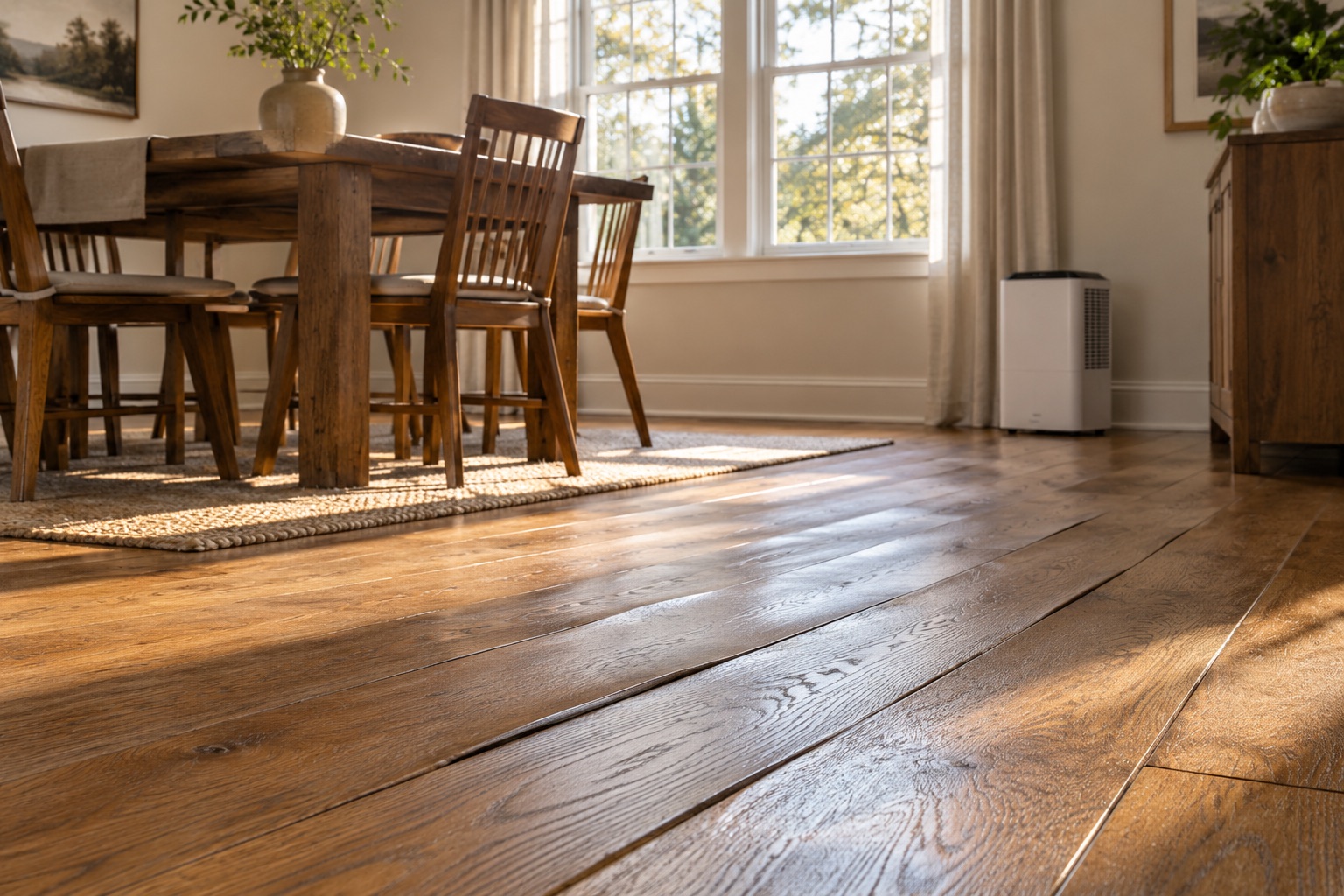
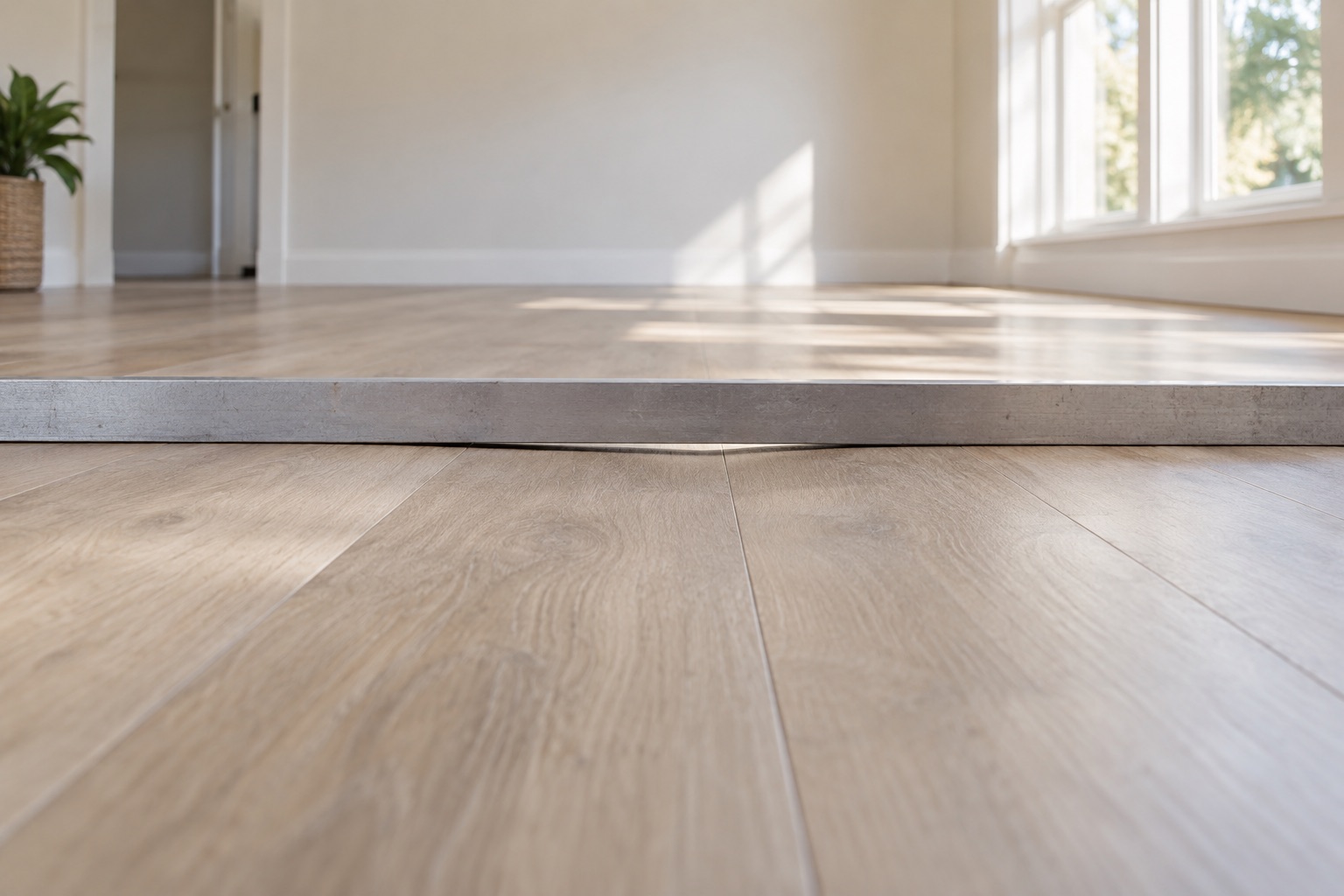
Ask how edges, corners and transitions will be handled, since those areas can differ from the open floor. Confirm whether loose boards, movement or moisture conditions need attention first. A finish operation does not correct an unstable assembly. If a test area shows that the desired color or texture cannot be achieved without excessive removal, stop and compare a less aggressive treatment with replacement. The test has value precisely because it can change the decision before the whole room is affected.
Compare selective replacement with broader renewal
One damaged plank may be replaceable, but matching an aged floor takes more than locating the same species. Grade, dimensions, texture, finish and light exposure affect the appearance. Ask whether spare stock is available and whether replacing an interior plank is feasible with the installation method. A floating system and a bonded system require different planning.
A hypothetical hallway with one deep gouge may justify living with the mark, replacing a board or recoating the surrounding floor, depending on the goal. A room with widespread delamination presents a different decision that a cosmetic quote should not obscure. Compare total disruption, transitions and expected appearance rather than material price alone. Keep the decision tied to the specific defects: replacement is not automatically wasteful, and sanding is not automatically the more durable choice.
Require an outcome you can verify
The proposal should identify the preparation method, coating system, repair areas, sheen and expected remaining defects. Include dust controls and the product's cure and furniture-return instructions. Ask for a sample or representative test patch, and assess it in the room's normal lighting before approving a major color change.
At completion, compare the floor with that approved result, including edges and transitions. Retain the finish identification and updated record of what work was performed; those details help the next refinisher assess compatibility and remaining material. Avoid applying a new maintenance product merely because the floor looks dry. The long-term benefit of a careful decision is preserving useful options. A modest recoat with clearly understood limitations can be better than an aggressive sanding that consumes material without delivering the appearance you wanted.
BEFORE YOU PROCEED
Your project checklist
- Define whether the goal is sheen, color, texture or damage removal.
- Identify the exact wood-floor product and installation method.
- Assess remaining material and prior sanding.
- Discuss contamination and finish compatibility.
- Approve a representative test area when the result is uncertain.
- Record the new coating and work performed for future maintenance.
Questions that come up next
Does a thick original wear layer guarantee refinishing?
No. Remaining thickness, flatness, defects, texture and previous work also affect the decision.
Will recoating remove deep scratches?
It may improve uniformity and protection, but it does not remove deep defects in the wood. Confirm expected appearance beforehand.
EVIDENCE & SCOPE
Sources for this guide
Applies to: United States general material and workmanship guidance; selected-product instructions and applicable local requirements control.
Reddit discussions identify questions and experiences, not verified diagnoses or code requirements. Technical claims should be read with the linked primary source, product instructions and local requirements.
- NWFA: Refinishing Your Floorsstandard
Maintenance coat versus full sanding; wear layer, flatness and condition. Refinishing suitability depends on the floor construction and remaining material.
- NWFA: Types of Wood Floorsstandard
Solid versus engineered construction and potential refinishing. Indexed association text reviewed; refinishing potential depends on the actual wear layer and condition.
- Buffing & recoating engineered hardwood?reddit
Thin engineered wear layer and wire-brushed texture limit sanding, but a maintenance coat is proposed. Search excerpt reviewed; the full discussion was not available during research. This is an individual homeowner account.