THE SHORT ANSWER
Cupped hardwood should be evaluated for moisture and stability before sanding. Some distortion may improve as conditions normalize, while damaged boards or finishes may still require repair. The shape alone does not establish the cause or outcome. Have the floor and relevant surrounding materials assessed, document changes, and decide on refinishing only after the moisture problem is resolved.
Describe the shape accurately
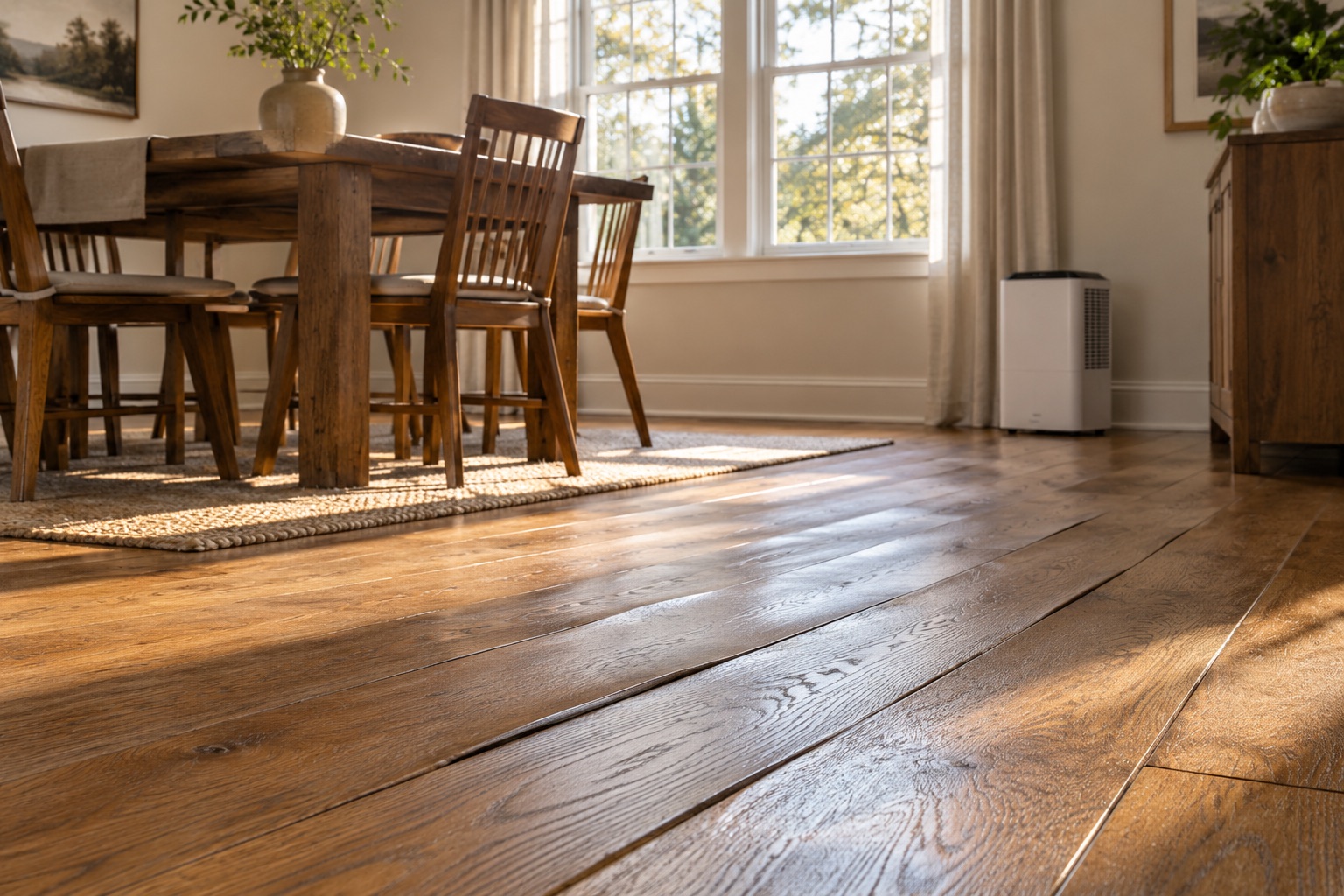
Cupping means the edges across a board's width stand higher than its center. A raised center is a different shape, commonly described as crowning. A floor can also have finish peeling, swollen joints or loose boards without the same underlying condition. Photograph the pattern with a straightedge nearby, without using the straightedge to force anything flat.
In the spill-related discussion that prompted this article, an owner asked whether oak boards would recover after a pot of coffee reached the floor. Commenters offered incompatible conclusions about immediate replacement and waiting. The account cannot tell you what your floor will do. It does show why the source, duration and distribution of moisture matter more than a confident answer based on one photograph. Record the event and any changes since it happened.
Find the moisture source before choosing a finish repair
The NWFA's moisture guidance explains that wood changes dimension as its moisture conditions change. That makes the investigation broader than the visible upper surface. A spill, appliance leak, damp substrate or changed room conditions can require different responses. Ask whether the affected pattern points toward one source or whether more than one condition may be involved.
If liquid is still entering the area, address that first. A flooring refinisher should not be expected to repair an unresolved plumbing or building-water problem through sanding. Note whether nearby baseboards, cabinets or adjoining rooms show changes. Avoid pulling boards at random, particularly near appliances or concealed services. A qualified evaluator can decide where measurements or controlled access will provide useful information without destroying evidence or spreading contaminated material.
Use measurements and time together
A calendar alone does not prove that a floor is dry enough to repair. Conditions depend on the materials, exposure and drying environment. Ask the evaluator what is being measured, how readings compare with unaffected areas, and what trend would indicate that the assembly has stabilized. Keep location-marked readings so a later visit can compare the same places.
Do not turn one internet drying estimate into a deadline for sanding. Also avoid assuming that a quieter odor or dry-feeling surface establishes conditions below. The evaluation may need to consider both flooring and substrate. For example, a hypothetical small spill promptly removed from a finished surface presents a different access problem from a prolonged refrigerator leak reaching beneath several boards. The same number of elapsed days does not make those situations equivalent.
Why sanding too early can create another problem
Sanding changes the shape by removing wood. If the boards later change shape again as moisture conditions normalize, the new surface may no longer be flat. It can also consume material that would otherwise be available for a future repair. The decision therefore needs evidence that the cause has been addressed and the floor is suitable for the intended work.
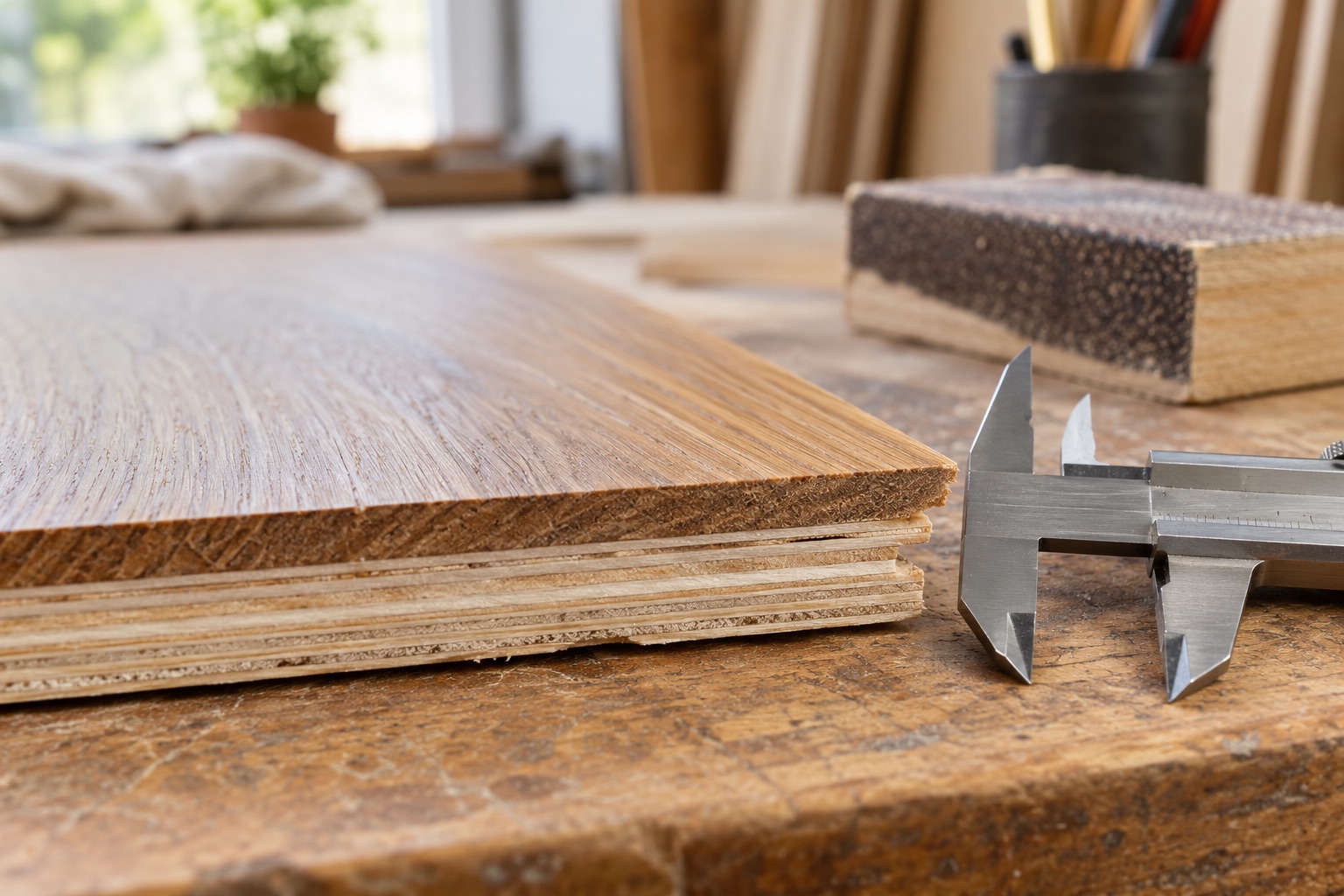
This is especially important where the wood layer is limited or the floor has already been sanded. NWFA's refinishing guidance identifies wear-layer thickness, flatness, condition and the work performed as factors in sanding potential. A promise to sand every cupped floor flat overlooks these differences. Ask the refinisher to explain why sanding is appropriate now, which defects it can remove and which may remain visible after the finish is renewed.
Separate finish damage from damaged wood
A water mark in the coating is not necessarily the same as staining within the wood, and a surface treatment that improves one may not fix the other. Inspect discoloration, loose finish, open joints and board attachment separately. The repair scope should say whether it addresses appearance, shape, adhesion or all three.
Localized board replacement may be considered when particular pieces cannot be retained, but matching species, grade, dimensions and aged color can be difficult. A spare board helps identify the original product; it does not guarantee an invisible repair. Broader refinishing may blend appearance while increasing the work area. Compare those options after the floor has been assessed, not while guessing how much of the discoloration is superficial. Ask to see a sample or test area when the proposed result is uncertain.
Set realistic boundaries for a repair
Agree on which rooms or continuous areas will be treated and how transitions will look. If cabinets stand on the flooring, clarify how their edges will be protected and what can be reached. Discuss furniture movement, dust management, coating odor and the selected finish's return-to-use instructions. These practical details affect whether a technically reasonable repair is workable in an occupied home.
An allowance for hidden damage can be appropriate when the underside has not been inspected. Define what evidence triggers a revised scope and how it will be documented. Do not accept an undefined promise to make the floor like new when age, previous sanding or material availability limit the result. A clear scope can instead identify a flatness objective, retained character, expected color variation and areas where a replacement board may remain distinguishable.
Check the result and prevent a repeat
Before accepting refinishing, review the moisture findings and the reason the evaluator considered the floor ready. Compare the repair with the agreed sample and scope under normal room lighting. Confirm that no new loose boards or damaged transitions were introduced and that the finish has received the specified cure and protection.
Keep photographs and the source-correction record with the flooring documents. If a dishwasher or refrigerator caused the problem, make sure access and leak detection are considered during reinstallation. Follow the flooring and coating care instructions rather than adding aggressive cleaners to remove a remaining mark. A successful repair is more than an improved photograph: it leaves a serviceable floor over an understood substrate and a corrected moisture condition, with honest expectations about the original damage.
BEFORE YOU PROCEED
Your project checklist
- Distinguish cupping from crowning, finish damage and loose boards.
- Document the water event and subsequent changes.
- Compare measured conditions with unaffected areas.
- Resolve the moisture source before sanding is scheduled.
- Confirm remaining sandable material and previous refinishing.
- Agree on color variation and the repair boundary.
Questions that come up next
Will a dehumidifier guarantee the boards flatten?
No. Drying conditions, exposure and material damage vary; monitor the assembly rather than assuming a guaranteed recovery.
Can I sand only the high edges now?
Do not do that before stability and remaining material are assessed. Removing wood early can complicate the final repair.
EVIDENCE & SCOPE
Sources for this guide
Applies to: United States general material and workmanship guidance; selected-product instructions and applicable local requirements control.
Reddit discussions identify questions and experiences, not verified diagnoses or code requirements. Technical claims should be read with the linked primary source, product instructions and local requirements.
- NWFA: Problem Preventionstandard
Moisture-driven wood movement and scratch prevention. Industry guidance on moisture and surface wear; it does not diagnose a particular floor.
- NWFA: Refinishing Your Floorsstandard
Maintenance coat versus full sanding; wear layer, flatness and condition. Refinishing suitability depends on the floor construction and remaining material.
- Anyone successfully repaired hardwood cupping?reddit
A coffee spill cupped oak boards; comments disagree about drying, replacement and immediate sanding. Search excerpt reviewed; the full discussion was not available during research. This is an individual homeowner account.