THE SHORT ANSWER
Select the cutting method and dust-control method together. Tile composition, the cut, the tool and whether work is indoors determine the plan. Wet cutting and extraction can reduce dust when correctly matched to the task, but neither a little water nor a basic mask automatically establishes safe exposure. Covered workplace requirements and homeowner decisions have different legal scopes.
Describe the cut before choosing the tool
A straight cut across a loose tile, an opening in a large slab and trimming an installed tile beside a shower base are different tasks. Identify the material, thickness, edge-quality requirement and available access. Then decide which method can make that cut while controlling the hazards.
The homeowner discussion behind this article involved trimming installed floor tile and asking whether a particular mask would be enough. Starting with the mask skips several earlier decisions. Removing and replacing a tile may sometimes offer a more controllable method than cutting in place, but it can also affect waterproofing or adjacent finishes. Compare the complete task, including access and repair consequences. Do not choose an aggressive tool solely because it can physically reach the line.
Consider lower-dust methods where the material permits
A manual score-and-snap cutter can be useful for appropriate straight cuts on suitable tile. It does not make every shape or work on every material, so test the method on a spare piece when appropriate. A poor match can waste tile or leave an unacceptable edge.
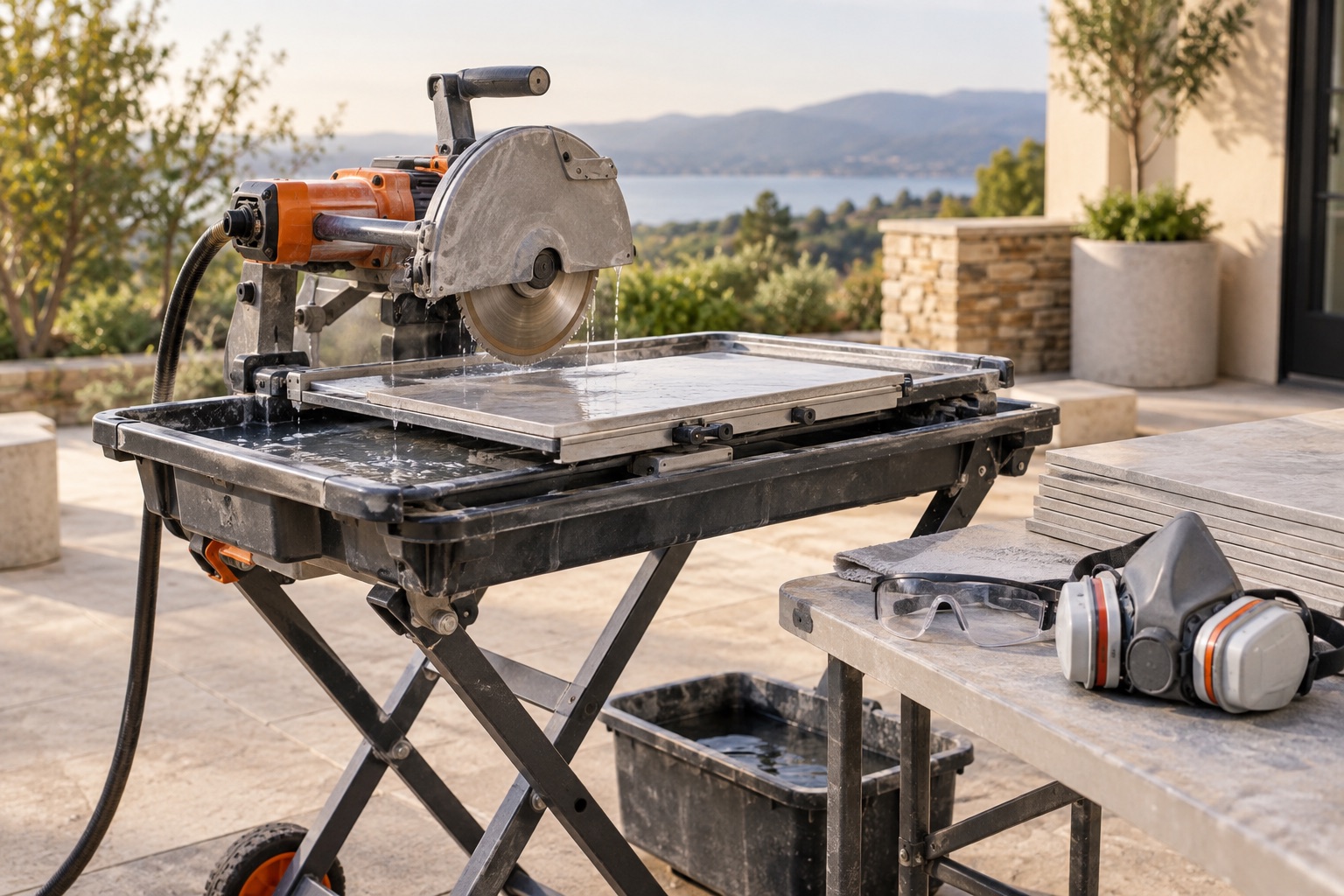
Wet saws, grinders and other powered tools have different capabilities and requirements. Use equipment and blades rated for the actual material and intended method. Do not add water to a tool not designed for wet operation. Decide where the work can take place without exposing occupants or others nearby. Moving work outdoors can change the containment challenge, but it does not make uncontrolled dust or slurry acceptable. The selected method should be practical enough that the crew will use it for the small cuts as well as the large ones.
Understand why mineral dust needs a specific plan
Cutting materials that contain crystalline silica can generate respirable dust. OSHA's construction silica guidance describes control approaches for covered work, including task-specific methods. Those workplace requirements should be followed where applicable; they are not replaced by a homeowner's preference for a cleaner-looking room.
Avoid assuming a brief cut is automatically harmless or that visible dust is the only relevant indicator. Material composition, method and conditions influence exposure. Ask the contractor how the task fits its control plan. If a homeowner is considering the work personally, the same hazard should inform whether suitable equipment, knowledge and conditions are available. A small desired change to the tile does not necessarily justify an improvised high-dust operation inside a furnished house.
Match wet cutting to the actual tool and location
OSHA's handheld-saw fact sheet discusses an integrated water-delivery approach and notes that indoor or enclosed work can need additional measures. That is more specific than occasionally spraying the cutting line. Follow the rated equipment and task instructions, including how the water is delivered and managed.
Plan slurry collection, electrical safety and protection of surrounding materials through the appropriate equipment and work practices. Water can damage finishes or reach places that should remain dry, particularly during an in-place cut near a finished assembly. Do not assume that because a tile can tolerate water, the entire room and tool arrangement can. The responsible worker should explain how both airborne material and liquid waste will be controlled without creating a new problem.
Treat extraction and respiratory protection as a system
A dust shroud, hose, extractor and filter must be appropriate and maintained for the task. A tool connected to an arbitrary vacuum is not automatically equivalent to a specified dust-control setup. Check that the equipment is operating as intended and that collection capacity and filter maintenance are addressed.
Respiratory protection, where required, must match the exposure and relevant program requirements. This article does not prescribe an N95 as universally sufficient for tile cutting. A respirator cannot replace needed engineering controls or protect people elsewhere in the room. Ask the employer or qualified professional how the selected equipment and protection were chosen. Avoid evaluating the plan only by whether the worker is wearing something over their face; source control and separation of others remain important.
Protect the surrounding assembly and occupants
For installed tile, identify what lies behind or beneath the intended cut. Waterproofing, concealed services and adjacent materials can change whether cutting in place is appropriate. A blade reaching beyond the tile can create a problem much larger than the original gap.
Keep occupants away from the work zone and define the route for tools and debris. The occupied-kitchen dust discussion shows why a household may reasonably ask how work is isolated from children's living space. Do not cut beside a taped doorway and assume that settles the matter. The control plan needs to account for airflow, access, cleanup and the actual material. If suitable conditions cannot be established, revise the method or arrange qualified help rather than reducing the plan to a warning to hold one's breath.
Inspect the cut and complete the cleanup
After the task, inspect the edge for damage and confirm that the intended underlying assembly remains intact. Where waterproofing may have been affected, have the responsible installer assess and repair it before the area returns to service. A visually neat tile edge does not prove that nothing beneath was cut.
Collect debris and slurry using the appropriate method and equipment. Avoid dry sweeping or blowing residue through the room. Follow the work plan for filter, waste and protective-equipment handling, then verify that the occupied area is ready for return. Keep records for any specialized work. A successful tile cut is not just straight and chip-free: it is completed with a method suited to the material, controlled exposure and no hidden damage to the surrounding construction.
BEFORE YOU PROCEED
Your project checklist
- Identify the material and exact cut geometry.
- Compare manual cutting, removal and powered options.
- Use only tools rated for the selected wet or dry method.
- Verify the complete extraction or water-delivery setup.
- Check concealed waterproofing and services before in-place cutting.
- Plan occupant separation, slurry collection and final cleanup.
Questions that come up next
Is an N95 always enough for cutting tile?
No universal mask recommendation is appropriate. The task, controls and applicable exposure requirements determine protection.
Does wet cutting eliminate every dust concern indoors?
No. Correct equipment and additional controls may still be needed, particularly in enclosed work.
EVIDENCE & SCOPE
Sources for this guide
Applies to: United States; OSHA construction guidance applies to covered workplaces, with hazard-control principles explained separately for homeowners.
Reddit discussions identify questions and experiences, not verified diagnoses or code requirements. Technical claims should be read with the linked primary source, product instructions and local requirements.
- OSHA: Crystalline Silica in Constructiongovernment
Employer construction standard, engineering controls and task-specific resources. US workplace construction guidance; legal obligations differ from a homeowner doing personal work.
- OSHA: Handheld Power Saws Fact Sheetgovernment
Integrated water delivery and indoor/enclosed-work limitations. Indexed US workplace fact sheet reviewed for handheld saws and task-specific silica controls.
- Possible to contain debris/dust from Countertop and backsplash replacement?reddit
Family with small children wants to understand whether kitchen work can be isolated from living space. Search excerpt reviewed; the full discussion was not available during research. This is an individual homeowner account.
- Looking for advice on cutting floor tile in placereddit
Small tile modification leads to questions about cutting tools, airborne silica and whether one mask is enough. Search excerpt reviewed; the full discussion was not available during research. This is an individual homeowner account.