THE SHORT ANSWER
Tile and grout are the visible finish, while a properly detailed waterproofing assembly controls water behind and beneath them. The important connections include the drain, seams, corners, penetrations and built-in features. Replacing grout or applying a surface sealer may address a maintenance issue, but it does not establish that a leaking shower's concealed assembly has been repaired.
Understand the layers behind the finished shower
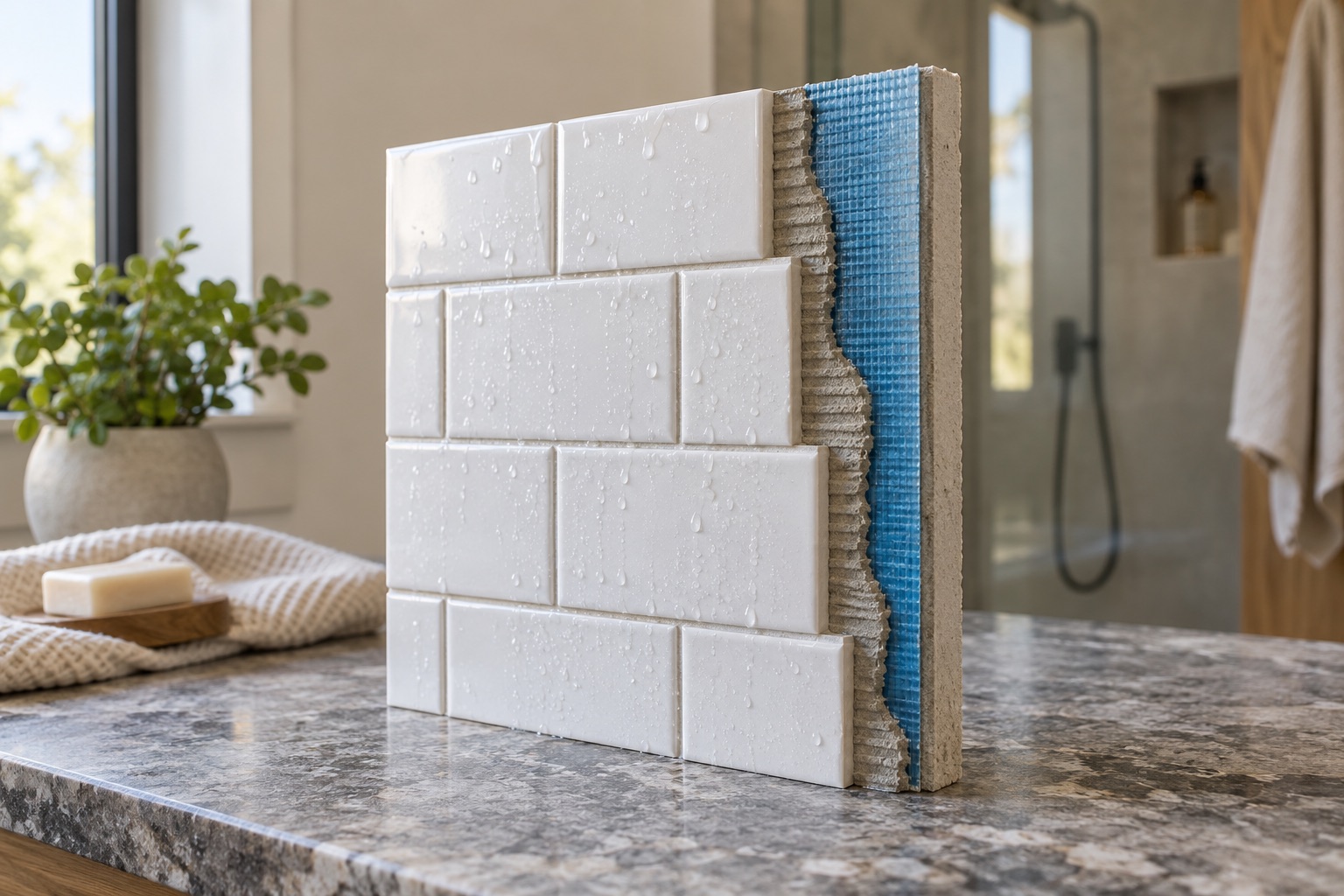
A shower can look complete while its most important water-control details remain hidden. Tile, setting material, waterproofing, backing and framing have different roles. The specific arrangement varies by system, but the finish should not be treated as the only barrier protecting the building.
A homeowner with a leaking tiled bench asked whether a coating or a stone cap could provide a quick fix. That is an understandable response to expensive-looking damage, but it begins with a proposed surface treatment before the leak path is established. Water may enter at one location and appear elsewhere. A new cap can improve appearance while leaving the underlying connection unchanged. Start by identifying the existing system and the evidence of leakage, then choose the repair that actually addresses the assembly.
A product is only part of a waterproof system
Schluter's KERDI documentation describes a sheet membrane used within a tiled wet-area assembly. CUSTOM's RedGard documentation describes a liquid-applied waterproofing product with its own requirements. These are different methods that depend on correct preparation and connections; neither can be evaluated solely by the presence of a familiar brand or color.
Ask which complete system was specified and how its components connect. A sheet membrane needs the prescribed treatment at seams and transitions. A liquid membrane needs the required coverage and application conditions. Product instructions govern the details. Avoid the opposite myths that all liquid membranes are unsuitable for shower pans or that any liquid coating can fix any assembly. Approval depends on the product, application and complete installation, not the category name.
Trace continuity at the difficult locations
The middle of a wall is often easier to understand than a drain connection, curb corner or pipe opening. Focus inspection records on those interfaces. Identify how waterproofing connects to the drain, where it turns up or terminates, and how changes of plane and penetrations are handled.
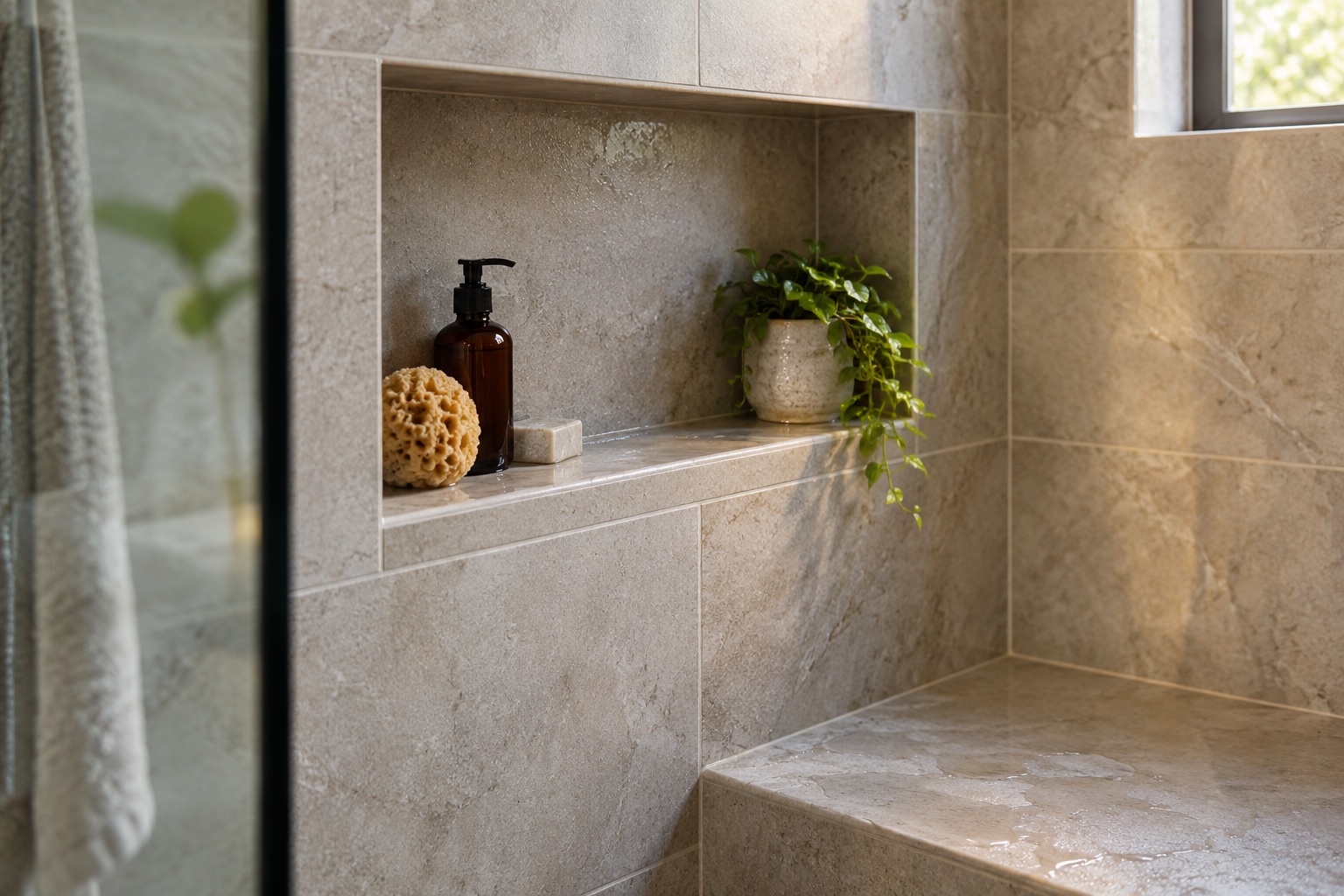
Niches and benches add corners and horizontal surfaces. Door hardware or accessories installed later can introduce new penetrations. Ask how those are included in the approved detail rather than assuming silicone on the surface is sufficient. A useful drawing or photograph should let the responsible installer explain the water path and the continuity of protection. If no record exists, a repair investigation may require controlled access. Guessing from the tile pattern cannot establish what is behind it.
Separate drainage from waterproofing
Keeping water out of the structure and allowing it to leave the shower are related but distinct tasks. A waterproof surface that retains water can still create maintenance and usability problems. Conversely, a surface that drains visibly may conceal a failed connection below.
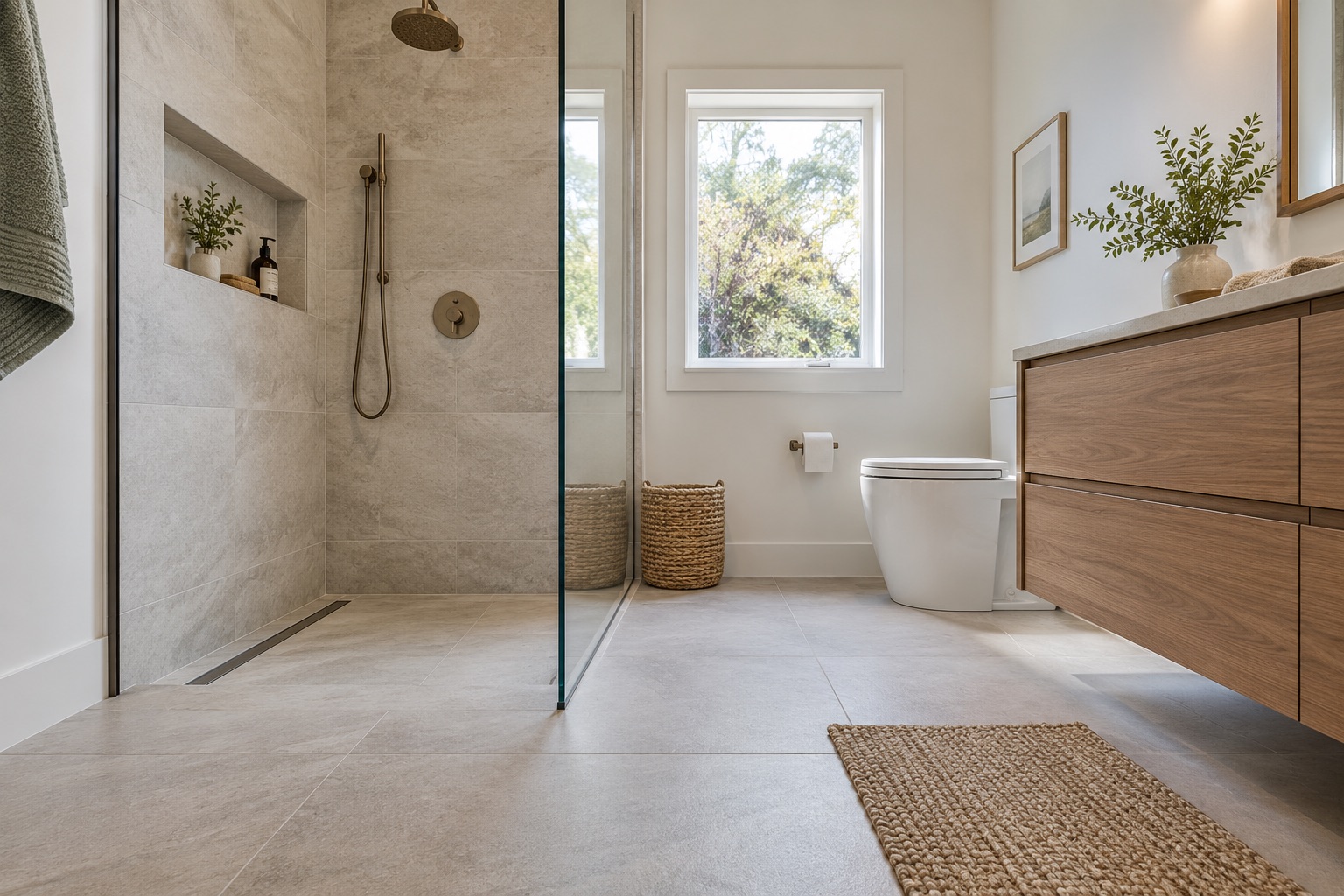
Evaluate slopes, drain position and the behavior of shelves, benches and transitions as part of the design. Do not assume the finished tile slope proves that the concealed layer has the required geometry. The correct arrangement depends on the chosen system. Ask the installer to identify what was checked before tile and what can be observed afterward. A shower that clears surface water quickly is encouraging, but that observation is not a substitute for the assembly's specified testing or proof that all concealed joints are intact.
What a water test can tell you
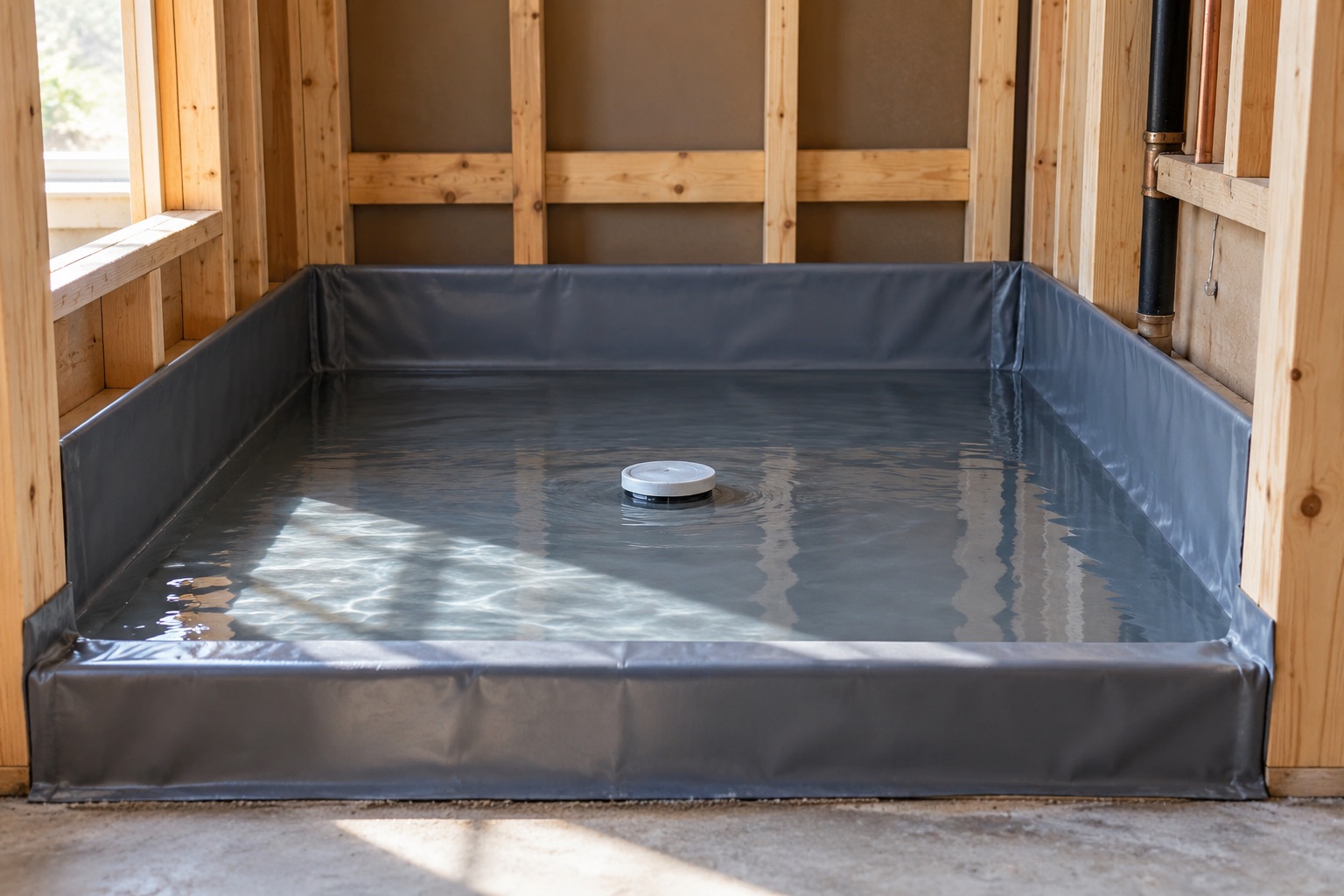
A properly planned water test checks a defined portion of the installation under specified conditions. It can expose a leak before the finish makes access expensive. In a documented homeowner discussion, water appeared behind a membrane corner during an initial test, giving the installer a problem to resolve before proceeding.
The test must follow the system requirements and applicable inspection instructions, including preparation, cure and drain isolation. Do not assume a bucket poured toward the drain is equivalent to testing a pan. Also recognize the test's limits: a pan test does not automatically evaluate every wall penetration, door attachment or future accessory. Keep records of what was tested, how long, what was observed and what repairs were made. Retesting after a repair should address the relevant failure rather than merely produce a reassuring photograph.
Investigate a finished-shower leak methodically
Document where water appears and under what use conditions. Does it occur during showering, after prolonged use, near a door or while the shower is unused? Those observations can help the appropriate professional distinguish plumbing, enclosure and waterproofing possibilities without assuming one explanation.
Do not repeatedly flood a known leaking shower to demonstrate the problem. Protect the affected area and arrange an assessment. A surface regrout may be reasonable for a verified maintenance defect, but an active concealed leak needs a scope that explains the source and restores the affected layers. Removal of tile can damage otherwise intact membrane, so the repair boundary may be larger than the visible crack. Ask how new waterproofing will connect to sound existing material and how that connection will be verified.
Judge the repair by the concealed work as well as the tile
A repair proposal should name the system, explain the suspected or verified failure, and define the access and testing needed. It should also state what remains uncertain until the shower is opened. Compare alternatives on whether they restore continuity and drainage, not simply how much tile each removes.
Before the repaired area is covered, review the documented connections and required test results with the responsible installer. After finishing, check drainage, sealant locations and accessory penetrations against the agreed detail. Retain photographs and product information for future maintenance. A shower is not proven sound because the grout looks fresh or the membrane had a recognizable label. Confidence comes from a coherent assembly, correctly completed interfaces and verification appropriate to the work performed.
BEFORE YOU PROCEED
Your project checklist
- Identify the shower's complete waterproofing system.
- Document drain, corner, curb and penetration details.
- Check horizontal features for required drainage.
- Confirm what the water test actually evaluates.
- Investigate leak patterns before prescribing a surface treatment.
- Verify membrane connections before repairs are covered.
Questions that come up next
Can grout sealer repair a leaking shower pan?
Do not rely on it for that purpose. A leaking pan requires assessment and repair of its water-control assembly.
Is a liquid membrane automatically inferior to a sheet?
No. Both depend on approved applications, preparation, correct details and verification of the complete system.
EVIDENCE & SCOPE
Sources for this guide
Applies to: United States general material and workmanship guidance; selected-product instructions and applicable local requirements control.
Reddit discussions identify questions and experiences, not verified diagnoses or code requirements. Technical claims should be read with the linked primary source, product instructions and local requirements.
- Schluter KERDI Waterproofing Membranemanufacturer
Continuous membrane, system connections and water-test purpose. Manufacturer guidance for the KERDI waterproofing system and its connections.
- Failed my Flood Test and Need Advicereddit
A new membrane shower leaks at a corner during its initial water test despite following videos. Full thread text reviewed. This is an individual homeowner account.
- Help! Tile Shower Leaking into Basementreddit
A leaking tiled bench prompts requests for a cheap surface sealer or cap instead of investigating the underlying assembly. Search excerpt reviewed; the full discussion was not available during research. This is an individual homeowner account.
- CUSTOM RedGard Waterproofing and Crack Prevention Membranemanufacturer
Liquid-membrane preparation, coverage, thickness and shower uses. Indexed manufacturer product guidance reviewed; use depends on the approved assembly.