THE SHORT ANSWER
Gurgling can reflect drainage or venting problems, but sound alone cannot identify the cause. Note which fixtures are involved and whether wastewater is backing up, then obtain appropriate plumbing assessment. A sewer camera can help document pipe condition after access and visibility are suitable, but it should produce interpretable evidence rather than serve as an automatic justification for replacement.
Record which fixtures interact
Note whether the sound occurs at one toilet, when a nearby sink drains, or when an upstairs fixture releases water. Record slow drainage, changing water levels and any wastewater appearing elsewhere. Multiple affected fixtures can change the urgency and investigation compared with an isolated nuisance sound. Do not repeatedly run fixtures to reproduce a problem if water is already backing up.
The researched homeowner heard gurgling near a stack and wondered about a vent obstruction or drain defect. That is a useful question, but neither possibility can be confirmed from the sound description. Give the plumber the sequence of events and affected locations. It helps them investigate the system rather than begin with a favored remedy such as adding chemicals or replacing a fixture.
Treat wastewater backup as a different situation
If wastewater enters the home, limit use of affected plumbing and keep people away from contaminated areas. Obtain appropriate professional help promptly. Electrical hazards around wet areas require suitable emergency or qualified assistance; do not enter standing water to operate equipment. Cleanup and source correction both need attention.
The Seattle utility's sewer-troubleshooting guide explains backup response and questions to ask a service provider. Its ownership boundaries, contacts and local procedures apply to Seattle, not automatically to another jurisdiction. The broadly useful point is that a backup is more than an inconvenient sound. It can involve exposure and property damage that should not be treated as a routine experiment with household drain products.
Separate clearing a blockage from explaining it
Restoring flow can be an important immediate service, but it does not necessarily establish why the obstruction occurred or whether a defect remains. Ask what material or condition was encountered, where it was located and how confidently that location was established. A successful clearing operation is evidence of restored passage, not proof that every pipe is sound.
Avoid assuming every obstruction means the whole line needs replacement. Grease, objects, roots and damaged pipe imply different follow-up questions, and combinations are possible. The provider should distinguish what was actually observed from what is inferred. If a major repair is recommended, request the evidence connecting that recommendation to the identified condition rather than accepting urgency language without an explanation.
Understand what a camera can show
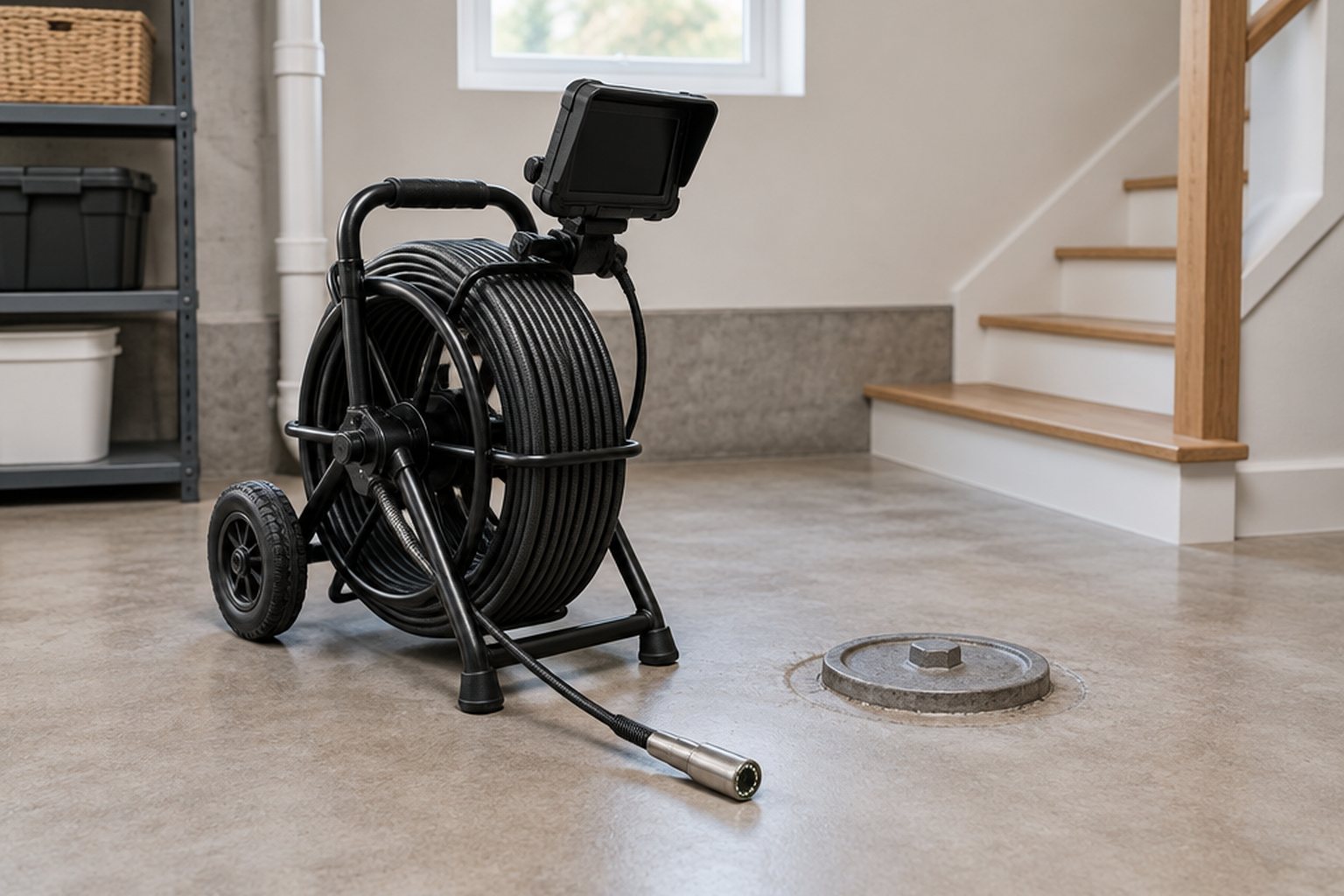
A camera can document visible interior pipe conditions along the accessible route. Its usefulness depends on access, cleanliness, visibility and the operator's interpretation. Standing dirty water or an uncleared obstruction can limit what is visible. Ask whether clearing or another step is needed before a condition survey can be meaningful.
The Seattle guide specifically discusses camera limitations and the value of retaining inspection video. Do not interpret a brief dark or submerged segment as a complete diagnosis without explanation. Conversely, a video of one accessible section does not certify an uninspected branch. The report should identify the route, observed distance and any point where access or visibility prevented further assessment.
Request evidence you can review later
Ask for the complete relevant recording, not only selected screenshots. It should be clear which property and route it represents, how location is referenced and where notable findings appear. Obtain a written summary connecting the images to the recommendation. If locating equipment was used to mark a position, preserve that information with the report.
A hypothetical isolated root intrusion at a documented joint is a different decision from widespread deterioration along an accessible route. A screenshot without location and context makes those cases harder to distinguish. The purpose of retaining video is not to make the homeowner a sewer inspector. It allows another qualified professional to review the evidence and avoids repeating the same investigation unnecessarily.
Keep venting and fixture questions in the assessment
Not every gurgle is resolved by a main-line camera. The drainage and vent arrangement, fixture condition and recent remodeling can be relevant. Tell the plumber about new fixtures, abandoned drains or altered walls, even if the work occurred years earlier. Do not assume a camera survey alone evaluates every above-ground plumbing connection.
The historical HUD rehabilitation inspection guide considers plumbing condition within the existing building. Its dated regulatory references are not current local law, but its inspection perspective supports looking beyond the first symptom. Ask the provider which parts of the system were evaluated and which require another method. A bounded report is more useful than a claim that one device checked everything.
Compare repair options against the same finding
If repair is warranted, request alternatives suited to the documented defect and site constraints. Ask what portion of pipe is addressed, how connections are handled, what access is needed and what remains unchanged. Different repair methods may have different eligibility limits; the contractor should explain why the proposed method fits the actual condition.
Include excavation or access restoration, affected landscaping and any public or shared-system coordination in the scope. Local responsibility for the service line varies, so confirm it with the relevant authority rather than copying Seattle's diagram. A lower price that omits restoration or necessary approvals is not comparable with a complete plan, even when both proposals use the word sewer repair.
Verify the result and document future maintenance
Ask what post-work observation or inspection demonstrates the intended repair. Where a follow-up camera survey is appropriate, retain it with the original recording so the changed section is identifiable. Confirm normal drainage under suitable supervised conditions and document any remaining limitations or uninspected branches.
If maintenance is recommended, ask what finding supports the interval and what warning signs should prompt earlier service. Avoid turning one cleared blockage into an indefinite schedule without a reason. The final record should separate the original symptom, observed cause, completed correction and any monitoring plan. That gives the next service provider a useful history if gurgling or backup returns.
BEFORE YOU PROCEED
Your project checklist
- Record affected fixtures and the sequence that produces symptoms.
- Stop repeated use when wastewater is backing up.
- Distinguish blockage clearing from diagnosis of the underlying cause.
- Request camera-route limits, complete video and written findings.
- Confirm local ownership and compare repair boundaries consistently.
- Retain post-repair evidence and a justified maintenance plan.
Questions that come up next
Does a gurgling toilet prove the vent is blocked?
No. Drainage obstructions and other system conditions can produce similar symptoms. The plumber should evaluate the fixture interactions and relevant drainage and vent arrangement.
Should I get a camera before the blockage is cleared?
That depends on access and visibility. A blocked or submerged section can limit useful images, so ask the provider what sequence will produce interpretable condition evidence.
EVIDENCE & SCOPE
Sources for this guide
Applies to: United States homeowner education. Climate, existing assembly, manufacturer instructions and locally adopted requirements govern project details; no nationwide code threshold is asserted.
Reddit discussions identify questions and experiences, not verified diagnoses or code requirements. Technical claims should be read with the linked primary source, product instructions and local requirements.
- Troubleshooting Your Sewer Problemgovernment
Questions about camera evidence, blockage location, causes and maintenance. Seattle utility document; local ownership and service rules differ elsewhere. Complete PDF reviewed.
- Residential Rehabilitation Inspection Guidegovernment
Existing-building inspection, structural distress and hidden systems assessment. Historical HUD guide accepted in 2000; inspection background, not a statement of current local code.
- Toilet drain issue.reddit
An anonymized homeowner question that informed the article. Retrieved through search excerpts; anecdotal evidence, not a technical diagnosis.