THE SHORT ANSWER
A smart shutoff can reduce the time a supply leak runs unnoticed, but it cannot prevent every kind of water damage. Compare point sensors, flow monitoring and automatic valves by what they detect and how they respond. Installation should include system compatibility, accessible manual operation, failure behavior and supervised testing, especially where irrigation, treatment equipment or fire protection is involved.
Define the damage you want to reduce
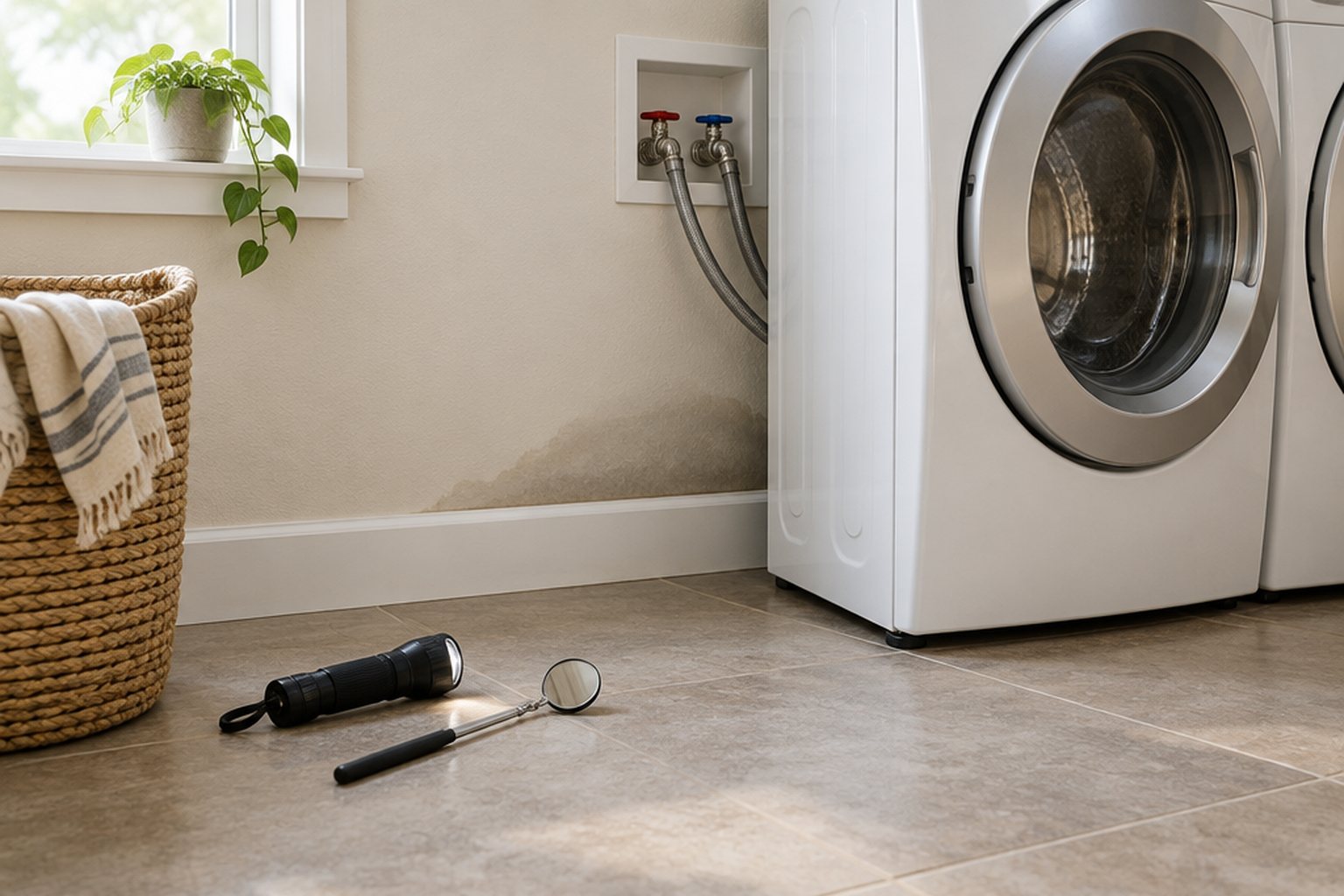
List locations where a leak could remain unnoticed: beneath an appliance, near a water heater, in an infrequently visited room or along concealed supply piping. Also distinguish those risks from rain entry, groundwater and drain backups. A valve on the domestic water supply cannot stop every source of water that might damage the house.
The researched repipe discussion included interest in leak detection and moving a difficult-to-reach shutoff. These are complementary decisions. An automatic system can help detect certain events, while an accessible known valve remains useful for service and emergencies. Begin with the response you need rather than choosing a device because its app displays attractive consumption graphs.
Compare sensors, monitoring and shutoff
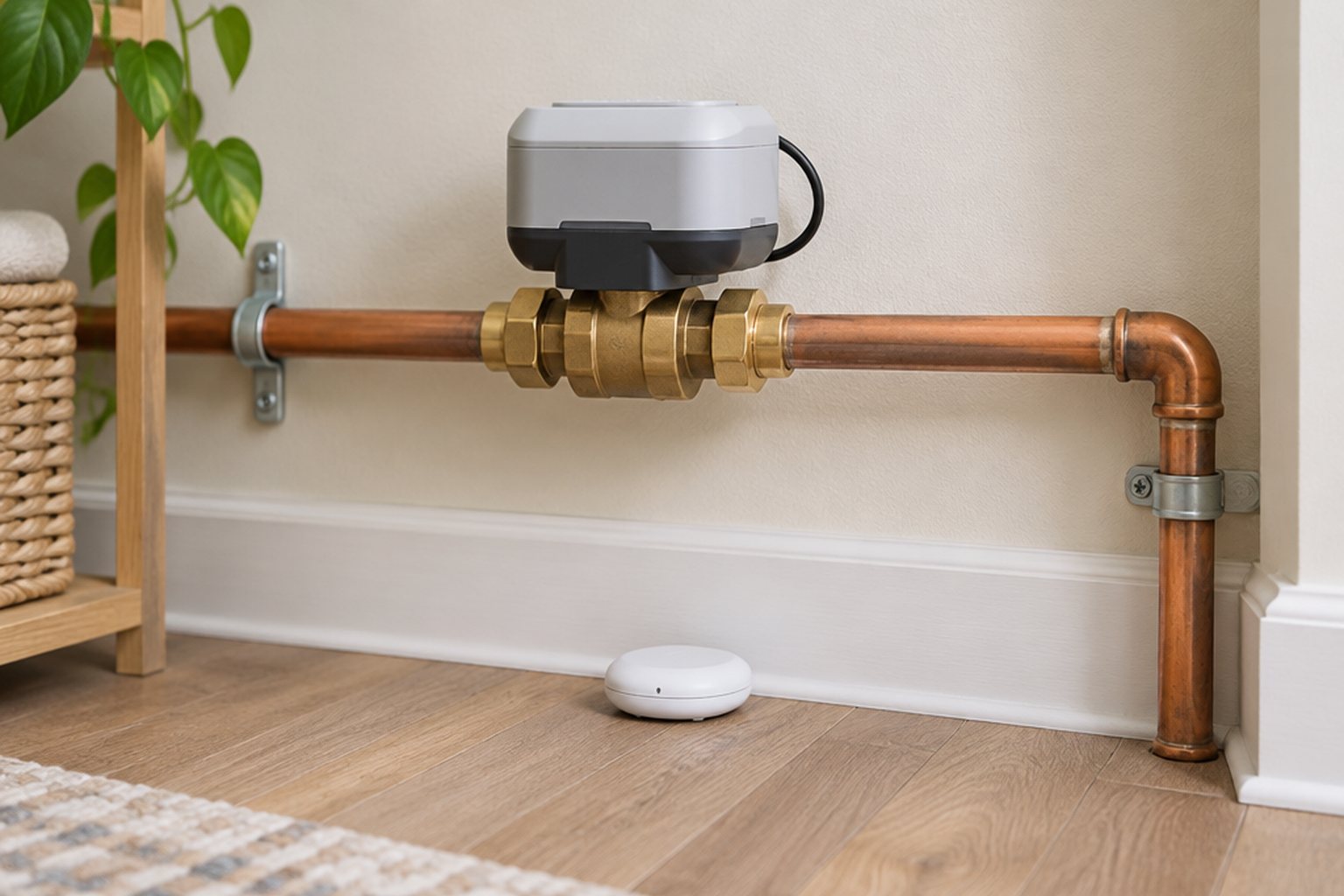
A point sensor detects water where it is placed. Flow or pressure monitoring evaluates behavior in the part of the supply system it observes. An automatic valve adds a response capability, depending on the product and configuration. Some systems combine these functions, but the presence of one does not guarantee the others.
EPA's leak-detection and flow-monitoring overview describes the range of available technologies. Use that distinction to ask what a proposal includes. A sensor that sends an alert still relies on someone receiving and acting on it unless it is integrated with a suitable valve. A flow monitor may detect abnormal use without identifying which room is affected. Both limitations matter when planning the response.
Map the water system before locating the valve
Have the installer identify what the proposed device will control and what remains outside it. Irrigation, treatment equipment, separate buildings, shared services and fire protection may require particular arrangements. Do not assume every branch should be interrupted by the same valve. The installation needs to preserve the intended operation of systems that serve different functions.
Ask for a simple diagram showing the meter or source, existing manual shutoff, new equipment and relevant branches. Identify access and service clearances. The EPA home-maintenance guidance supports knowing the home's meter and water controls, but the installer must resolve the actual configuration. A device placed conveniently near power or Wi-Fi may still be in the wrong location for the intended protection.
Ask what happens when power or connectivity fails
Products differ in local detection, remote notifications, backup options and valve behavior. Request the current instructions for the exact model rather than assuming that smart means cloud-dependent or that offline means completely unprotected. Ask which functions continue without internet service and which depend on electrical power.
Have the installer demonstrate the approved manual operating procedure under supervised conditions. Keep those instructions accessible to household members. A failed network connection should not leave the owner guessing whether water is on or how to restore service safely. Also clarify what happens after power returns and whether settings, schedules or alerts require attention. These details are more consequential than the appearance of the mobile dashboard.
Account for legitimate unusual water use
Long irrigation cycles, treatment regeneration, filling a large vessel and guests can differ from a system's usual pattern. Ask how the selected product handles those events and how the owner reviews an alert. The answer should avoid both constant nuisance shutoffs and broad overrides that remove protection without the owner understanding the consequence.
Moen's scheduled-use override guidance illustrates this issue for one product and water-softener use. It is not a universal instruction for competing devices. Review the exact manufacturer's procedure and document any exception that is enabled. An override should have a clear purpose and scope, not become a permanent workaround because the installation was never configured properly.
Plan alerts and human response
Decide who receives notifications, who can access the home and what they should do. An alert sent only to an unavailable phone may provide little benefit. Conversely, sharing control unnecessarily can create confusion about who changed a setting or reopened a valve. Use an arrangement that fits the household and the device's current access controls.
For a hypothetical vacation home, a point sensor under a water heater may identify a local event, while an automatic valve limits ongoing domestic supply. Someone still needs to inspect the condition, arrange repair and determine when service can resume. Automatic shutoff is therefore part of a response plan, not a substitute for diagnosis or a promise that no damage will occur.
Commission the installed arrangement deliberately
Ask the installer to test detection and valve operation using the manufacturer's approved method. Verify that the intended branch is controlled, alerts reach the right people and normal fixtures work afterward. Do not create a real damaging leak as a demonstration. Record any learning period, initial configuration and maintenance requirements for the exact product.
Include the plumbing installation itself in acceptance. The new connections, supports, accessibility and any required electrical provision deserve inspection appropriate to the work. A successfully paired app does not prove the mechanical installation is sound. Keep the model, serial information where relevant, installation record and warranty terms together so a later service provider can identify the system without guessing.
Maintain the protection and understand its boundaries
Follow product instructions for sensor batteries, valve exercise, updates and testing. Recheck protection after plumbing changes, network changes or long periods of nonuse. Point sensors may be moved accidentally during cleaning or appliance service, and new branches may fall outside an earlier monitoring assumption. Treat those changes as reasons to review the setup.
Continue ordinary maintenance of roofs, drains and appliances. A smart domestic-supply valve cannot compensate for every water pathway or defective component. Its value is a defined improvement in detection and response for the risks it actually covers. Choose the system whose limitations and maintenance you can understand, then preserve that understanding as the house and household change.
BEFORE YOU PROCEED
Your project checklist
- Separate supply-leak risks from rain, groundwater and drain problems.
- Identify whether the proposal includes sensing, monitoring and automatic shutoff.
- Map controlled branches and any systems requiring separate treatment.
- Verify power, network and manual-operation behavior for the exact model.
- Document legitimate-use exceptions and alert responsibilities.
- Perform approved commissioning and ongoing maintenance checks.
Questions that come up next
Will a smart shutoff prevent all water damage?
No. It may limit certain domestic supply leaks, but rain entry, groundwater, drain backups and water already released can remain outside its protection.
Do point sensors and flow monitors replace each other?
Not necessarily. They observe different things and can complement one another. Compare detection coverage, response behavior and maintenance for the particular installation.
EVIDENCE & SCOPE
Sources for this guide
Applies to: United States homeowner education. Climate, existing assembly, manufacturer instructions and locally adopted requirements govern project details; no nationwide code threshold is asserted.
Reddit discussions identify questions and experiences, not verified diagnoses or code requirements. Technical claims should be read with the linked primary source, product instructions and local requirements.
- Leak Detection and Flow Monitoring Devicesgovernment
Sensor and flow-monitor categories, shutoff selection and maintenance.
- Home Maintenancegovernment
Water-meter awareness and systematic household leak checks.
- Manual Override for Water Softenersmanufacturer
Scheduled water uses, learning behavior and nuisance alerts in automatic shutoff systems.
- Question about plumbingreddit
An anonymized homeowner question that informed the article. Retrieved through search excerpts; anecdotal evidence, not a technical diagnosis.