THE SHORT ANSWER
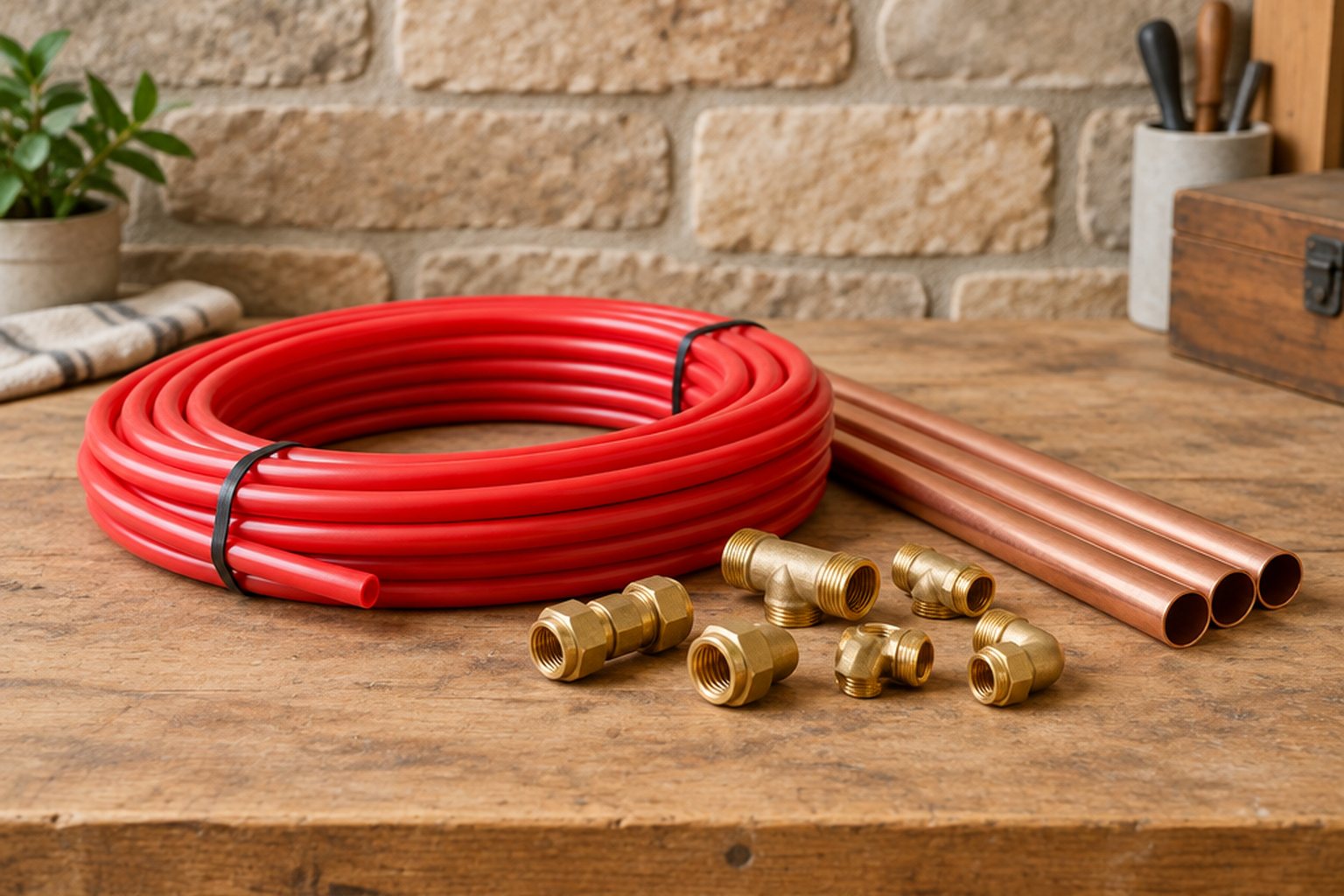
PEX and copper can each form part of a suitable repipe, but material choice is only one decision. Compare the exact product system, water conditions, routing, fittings, retained branches and testing. A complete proposal also covers access repairs and serviceability. Avoid choosing from universal lifespan claims or treating two quotes as equivalent merely because both say whole-house repipe.
Define what whole-house includes
List the fixtures and branches included, from the incoming service connection through distribution and accessible fixture stops. Identify whether the proposal retains any old piping behind tile, at showers or in difficult locations. Ask why those sections remain and how their condition affects the expected result. Different replacement boundaries can explain a large price difference.
In the researched repipe discussion, bids varied in PEX systems and retained connections, while a separate waste-pipe defect also needed attention. That distinction matters. A supply repipe does not automatically replace drains or every fixture component. Require a diagram or clear written scope so the material comparison does not conceal different amounts of actual plumbing work.
Consider water and operating conditions
Ask about the water source, known chemistry concerns, pressure and any treatment system. Materials and joining systems have operating limits and compatibility requirements. An unexplained history of repeated failures deserves investigation rather than an automatic switch to whichever material is currently promoted. The cause may involve conditions or workmanship that a different product alone will not correct.
The current Copper Tube Handbook discusses design considerations including water conditions and system behavior. As an industry technical source, it is useful for understanding copper-system requirements, while its promotional perspective should not be mistaken for an independent ranking of all materials. Ask the plumber to connect recommendations to your water and piping arrangement rather than a general assertion that copper lasts forever.
Treat PEX as an identified product system
PEX products, fittings and joining methods are not interchangeable solely because they share a generic material name. Require the manufacturer, product line, permitted fittings and relevant installation documentation. Ask how the installer verifies compatibility and handles transitions to retained material. A letter designation or brand preference alone does not establish the quality of the complete installation.
Uponor's residential plumbing installation guide illustrates the breadth of product-specific instructions, including exposure, routing and connection considerations. Those details cannot be generalized to every PEX product. The homeowner's role is to require an identified, supported system and an installer who follows it, rather than attempt to choose a fitting method from isolated online claims about restriction or long-term sealing.
Compare practical tradeoffs without universal rankings
The following questions help make the comparison specific. They do not declare one material the winner or replace design for the actual house. Ask both bidders to answer the same questions and identify any assumption that remains unverified.
| Decision | PEX proposal | Copper proposal |
|---|---|---|
| Product system | Identify tubing, fittings and approved joining method | Identify tube type, fittings and approved joining method |
| Exposure | Document product limits and protection along the route | Document environmental compatibility and protection along the route |
| Existing connections | Explain supported transitions and retained branches | Explain supported transitions and retained branches |
| Access and repair | Show routing, service points and finish restoration | Show routing, service points and finish restoration |
| Verification | Specify required testing and installation records | Specify required testing and installation records |
This keeps attention on a complete installed system instead of anecdotes comparing an excellent installation of one material with a poor installation of another.
Review routing, protection and service access
Ask how new piping will pass through the house and how it will be supported and protected. Exposed, concealed, attic and crawlspace routes have different conditions. Future access to shutoffs and serviceable components should be planned, particularly if the original system required crawling into an inaccessible location just to isolate the house.
Consider noise, movement, freezing exposure and interaction with other trades where relevant. Neither material should be casually described as immune to poor environmental conditions. The proposal should identify how the chosen route meets product and local requirements. A route that minimizes today's drywall opening may create a maintenance disadvantage later; discuss that tradeoff before finishes are restored.
Include fixtures, valves and drain findings separately
During access, the plumber may discover deteriorated valves, fixture connections or waste piping. Define how those findings will be documented and priced. A supply repipe can be a sensible opportunity to improve inaccessible controls, but it should not become an undefined authorization to replace unrelated components. Conversely, leaving a known defective connection outside the written scope should be a deliberate decision.
The historical HUD rehabilitation inspection guide supports evaluating existing systems and condition together. It is inspection background rather than current local code. Its practical relevance is the need to understand what remains after the project. A new distribution network connected to undocumented old sections is a different finished system from the one many homeowners imagine when they hear whole-house replacement.
Specify testing and restoration before comparing totals
Ask what testing, flushing or other commissioning the selected system requires and what record you will receive. The method should follow applicable requirements and product instructions, not a generic procedure improvised for the article. Confirm that testing occurs at the appropriate stage before access is closed, and clarify who arranges any required inspection.
Include finish restoration in the comparison: patching, paint, tile interfaces, insulation and access panels can materially affect cost and disruption. For a hypothetical pair of bids, one may include full painting of disturbed areas while the other leaves rough patches. Their totals are not directly comparable even if the pipe material and number of fixtures are identical.
Choose on the documented finished result
Before accepting work, review included and retained sections against the original scope. Obtain photographs where concealed routes or transitions will be useful later. Confirm valve identification, normal fixture operation and the agreed testing records. Keep exact product information so future repair work can use compatible components.
The best choice is the supported system that fits the home's conditions and is competently installed, verified and maintainable. Initial price remains important, but unsupported promises about lifetime durability are a weak basis for the decision. Ask the contractor to explain why the proposed material and route suit this house, and evaluate the evidence rather than trying to settle a universal PEX-versus-copper debate.
BEFORE YOU PROCEED
Your project checklist
- List every included fixture, branch and retained old section.
- Review water conditions and relevant operating history.
- Specify exact products, fittings and supported transitions.
- Evaluate route protection and accessible shutoffs.
- Compare testing and complete finish-restoration scope.
- Keep concealed-route photographs and product records.
Questions that come up next
Does PEX A automatically make a repipe better than PEX B?
No generic label establishes overall installation quality. Compare the exact supported product system, design, workmanship, operating conditions and verification rather than relying on the letter alone.
Does a supply repipe replace my drains too?
Usually that is a separate scope unless explicitly included. Ask the proposal to distinguish supply piping, drains, valves, fixtures and retained connections so the finished result is clear.
EVIDENCE & SCOPE
Sources for this guide
Applies to: United States homeowner education. Climate, existing assembly, manufacturer instructions and locally adopted requirements govern project details; no nationwide code threshold is asserted.
Reddit discussions identify questions and experiences, not verified diagnoses or code requirements. Technical claims should be read with the linked primary source, product instructions and local requirements.
- Copper Tube Handbookmanufacturer
Copper tube selection, joints, water chemistry, movement and design considerations. Copper industry technical reference; complete current official PDF reviewed.
- Residential Plumbing Installation Guidemanufacturer
PEX product system, UV marking, temperature/pressure, fittings and installation limits. Complete manufacturer PDF reviewed; instructions apply to the identified Uponor products.
- Residential Rehabilitation Inspection Guidegovernment
Existing-building inspection, structural distress and hidden systems assessment. Historical HUD guide accepted in 2000; inspection background, not a statement of current local code.
- Well, Time to Repipereddit
An anonymized homeowner question that informed the article. Retrieved through search excerpts; anecdotal evidence, not a technical diagnosis.
- Question about plumbingreddit
An anonymized homeowner question that informed the article. Retrieved through search excerpts; anecdotal evidence, not a technical diagnosis.