THE SHORT ANSWER
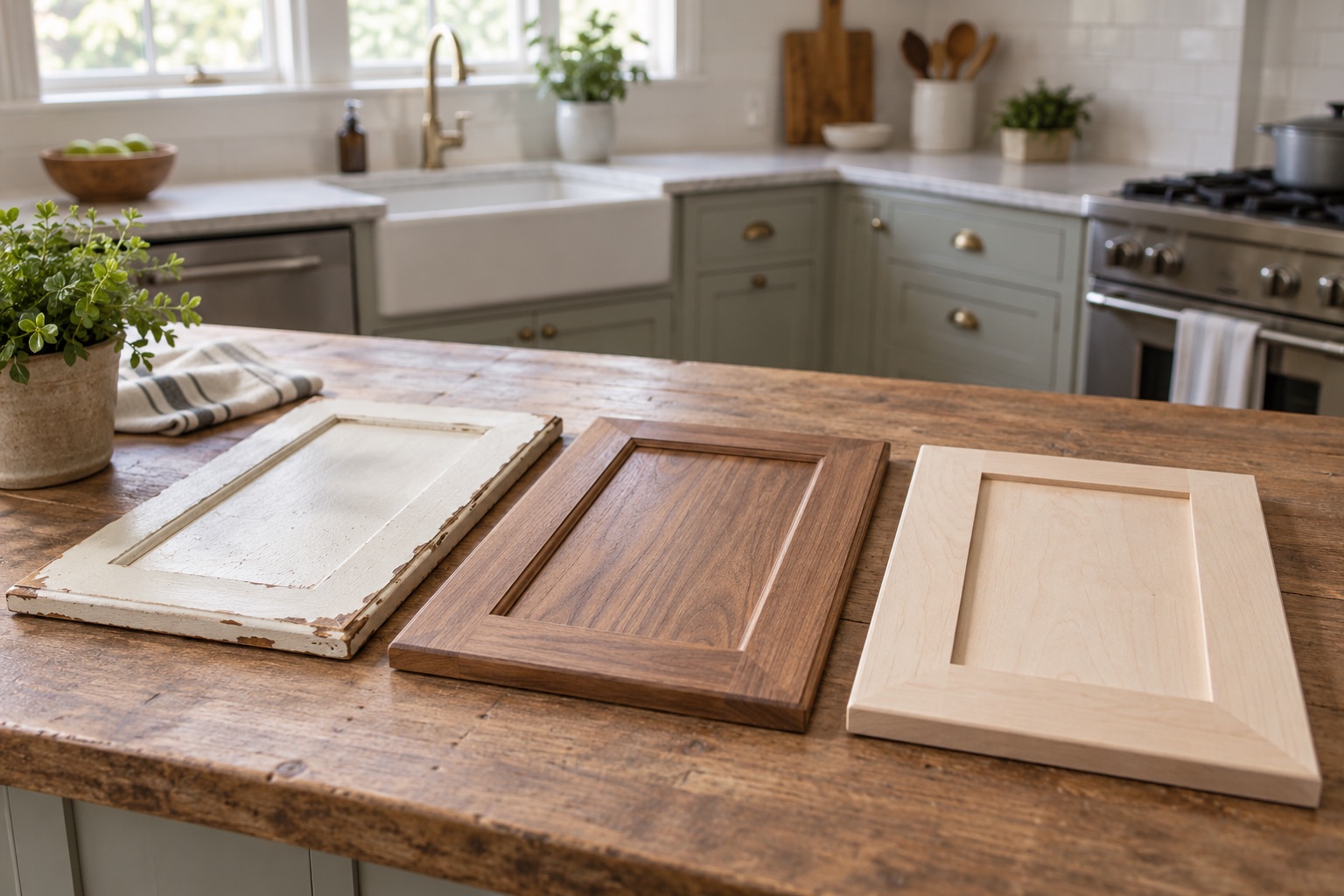
Paint when the existing construction and layout work and the goal is mainly a finish change. Consider refacing when sound boxes can support the desired doors and hardware. Replace when condition, configuration or functional limitations justify rebuilding. The decision should follow inspection of the boxes and related countertop work, not a comparison of three loosely defined price labels.
Separate appearance from function
List what you dislike about the kitchen before requesting quotes. Color, exposed wood grain, damaged doors, poor drawer access and an inconvenient layout are separate problems. Painting may address the first while doing little for the others. A new door style can change appearance without adding usable storage or correcting an awkward corner.
The homeowner discussion behind this decision involved wanting a new look while preserving granite countertops. That dependency narrowed the practical options. A useful comparison starts with what must remain and what needs to change. Walk through ordinary tasks such as unloading dishes and reaching pans. If the kitchen works well but looks dated to you, a surface-focused option deserves consideration. If daily use is frustrating, attractive new fronts may postpone rather than solve the problem.
Inspect the boxes and attachment
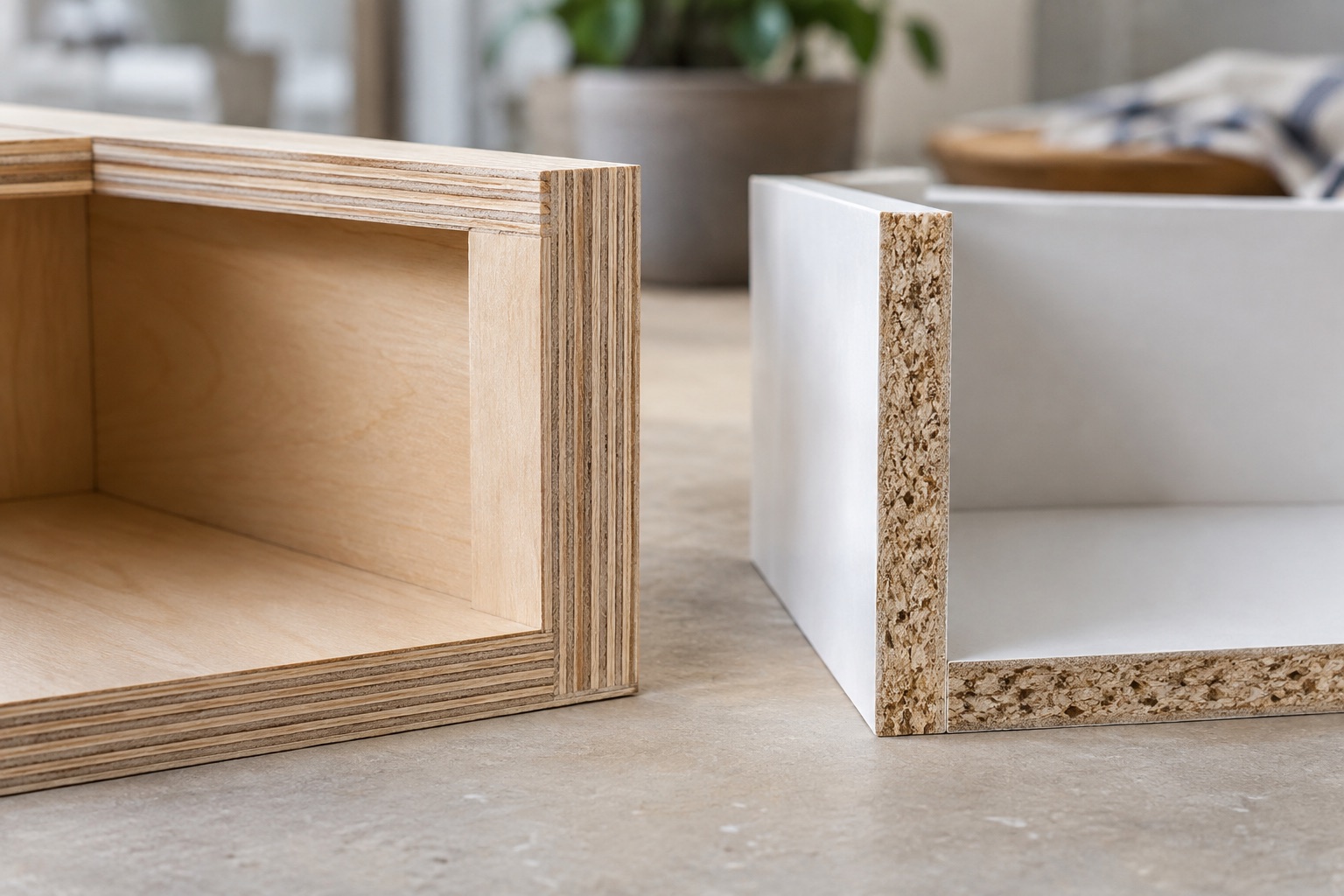
Open every cabinet and drawer. Look at panel edges, bottoms, shelves, backs, joints and fastening areas, especially under the sink and near appliances. Note swelling, delamination, loose joints, sagging shelves or difficulty keeping doors aligned. Distinguish a replaceable hinge problem from a damaged mounting area.
KCMA's cabinet certification program evaluates whole-cabinet structure, operation and finish, which is a useful reminder that quality extends beyond the visible door. Existing cabinets cannot be assumed to meet a certification merely because they resemble a tested product. Have the proposed refinisher or cabinet professional explain which components are sound enough to retain. Surface work on unstable boxes can leave you paying twice when later repairs disturb the new finish. Resolve attachment and moisture damage before pricing a cosmetic transformation as complete.
What painting can reasonably accomplish
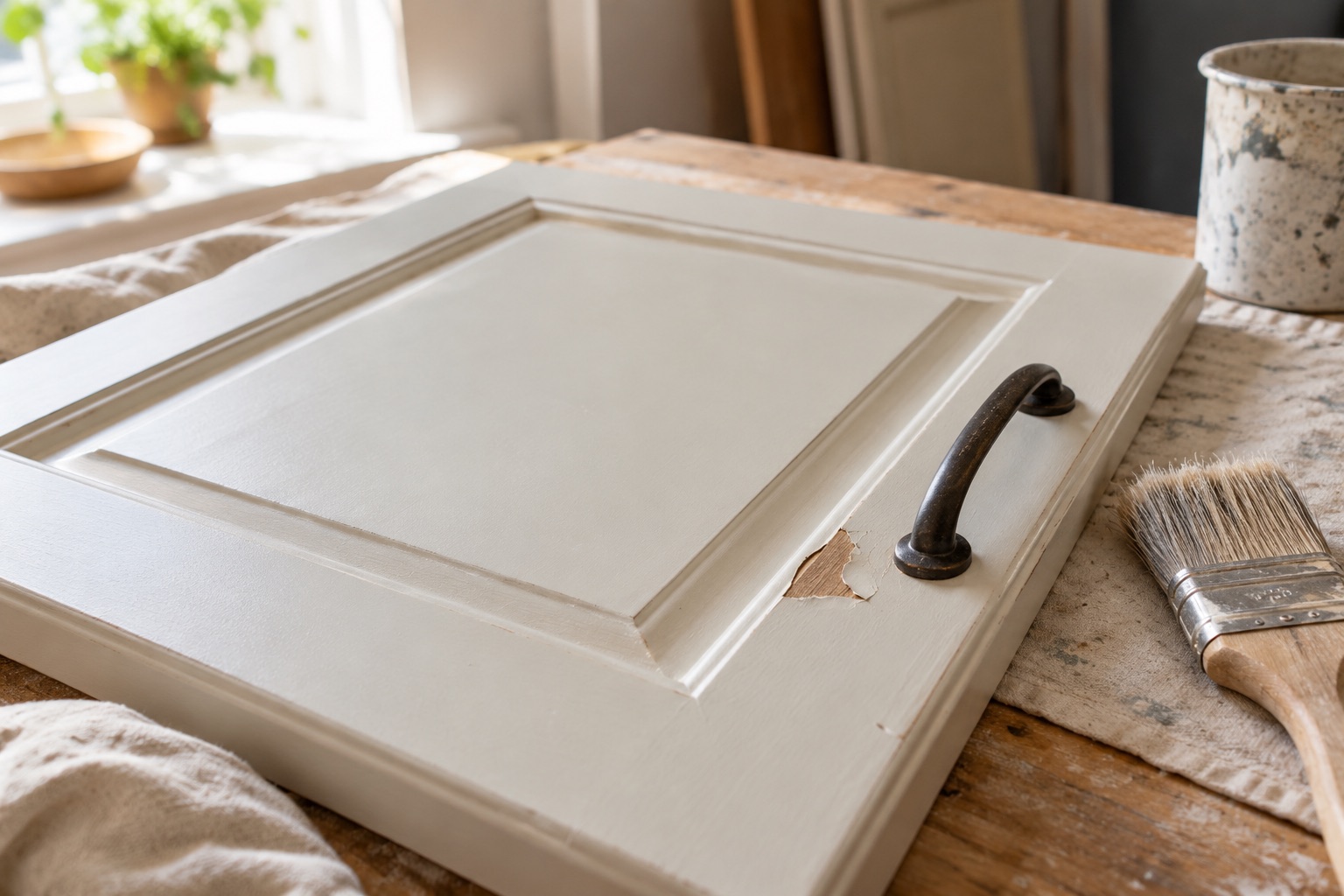
Painting changes the coating and color; it does not automatically remove deep grain, repair failing veneer or make incompatible surfaces suitable for every paint. The preparation needed for a smooth opaque finish can be substantial. Ask whether the scope includes doors, drawer fronts, exposed ends, face frames, interiors and difficult edges.
Benjamin Moore's cabinet-painting guidance emphasizes preparation and a suitable coating process. Compare proposals by their actual steps and expected appearance rather than the number of coats alone. A sample door is valuable when grain filling, sheen or brush texture matters. Clarify dry and cure stages, hardware removal and how the kitchen will be used during the work. Do not expect a cabinet finish to become fully service-ready simply because it feels dry that evening.
What refacing changes and what it preserves
Refacing commonly retains the cabinet boxes while changing visible surfaces and fronts, but the exact scope varies. Some proposals include new doors and drawer fronts; others add veneer or panels to exposed box surfaces and offer hardware changes. Ask for a component-by-component list so the term does not conceal differences between quotes.
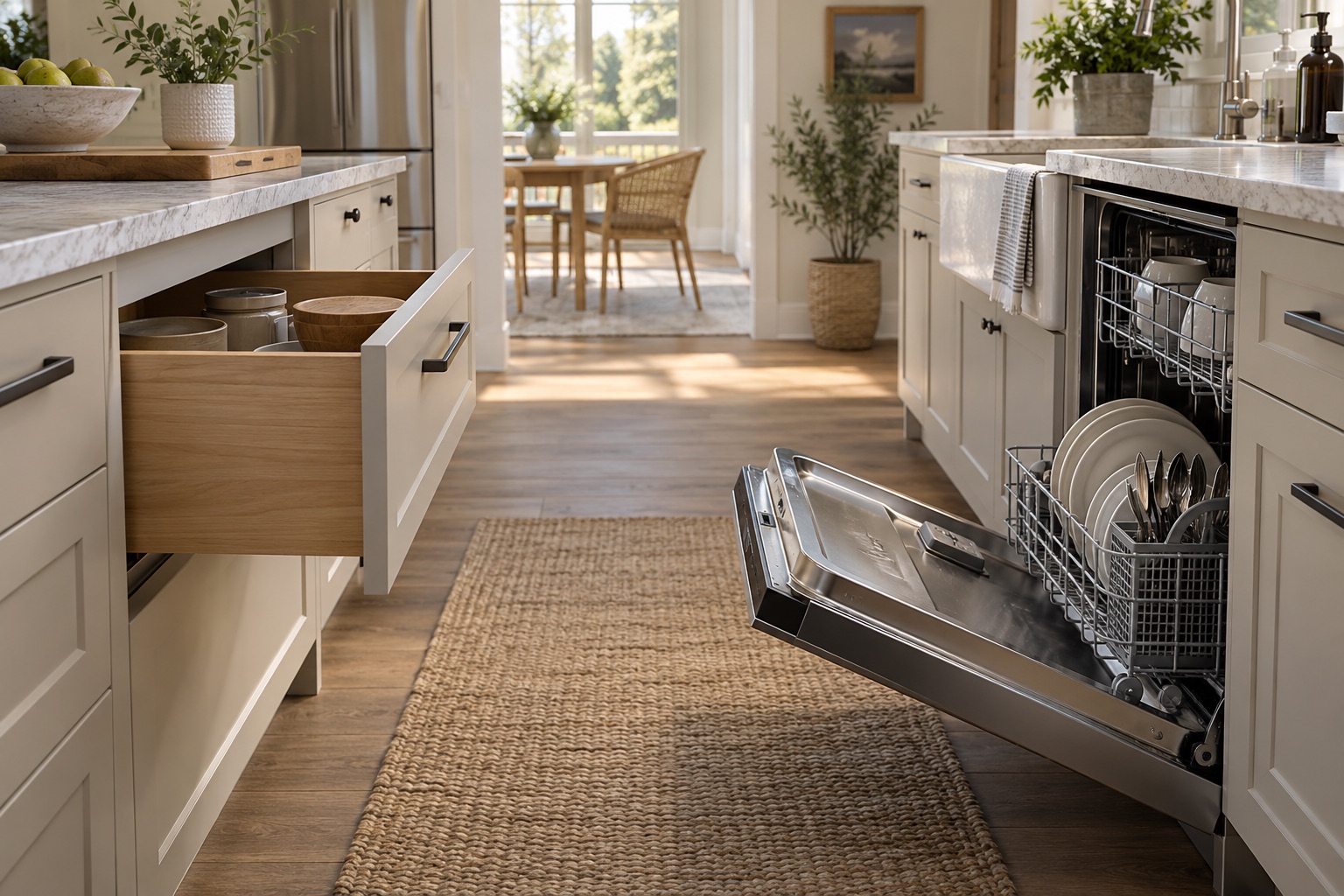
Check whether retained boxes can accept the proposed hinges, drawer hardware and door sizes. The inside dimensions and access geometry remain important. A deeper-looking drawer front does not create a larger box behind it. Review end panels, fillers, toe kicks and appliance openings in a sample or drawing. If the kitchen includes damaged or unusual boxes, determine whether those receive repair, replacement or merely a covering. A consistent exterior should not be achieved by hiding unresolved defects inside.
When replacement earns its disruption
Replacement allows changes to box dimensions, storage configuration and layout that surface work may not accommodate. It also exposes surrounding conditions and creates opportunities to coordinate appliances and clearances. That flexibility comes with removal, installation and related finish work that need to be included in the scope.
Consider replacement when the existing construction is substantially damaged, the layout is unsuitable or desired hardware cannot sensibly fit. Do not treat plywood as an automatic solution to every quality concern; construction and installation still matter. For a hypothetical kitchen with sound boxes but one inefficient corner, a selective cabinet change plus refinishing may be worth evaluating. For widespread water damage, preserving the boxes solely to save the countertop could be a poor tradeoff. The condition and dependencies should drive the choice.
Resolve the countertop and backsplash dependency
An existing stone countertop may be difficult to remove and reinstall without damage. That does not mean it is impossible, but the responsible fabricator should assess access, seams, support and the proposed cabinet work. A cabinet quote that assumes intact removal without examination can hide a large uncertainty.
Decide which party handles disconnection, temporary support, removal, storage and reinstallation where applicable. Include backsplash and wall repair if the work may disturb them. Clarify what happens if the countertop cannot be retained or a new cabinet arrangement changes its support. Avoid choosing the cabinet option first and leaving those questions for demolition day. A complete comparison should make the likely disruption and uncertainty visible so a lower initial price does not depend on an unverified assumption.
Compare complete outcomes rather than labels
Request written scopes with drawings or photographs identifying retained and replaced components. Include finish samples, hardware, adjustment, protection, cleanup and return-to-use instructions. Separate optional upgrades from repairs required to make the retained work serviceable.
At acceptance, operate every door and drawer, inspect exposed ends and interiors included in scope, and compare the finish with the approved sample. Check that new fronts do not collide with appliances or adjacent doors. Retain the coating and hardware information. The appropriate choice is the smallest scope that reliably meets your actual goals while respecting the condition of what remains. Painting, refacing and replacement can each be sensible; none is a bargain when it leaves the main functional or construction problem unresolved.
BEFORE YOU PROCEED
Your project checklist
- List appearance goals separately from functional problems.
- Inspect boxes, backs, shelves and hinge attachment areas.
- Define exactly which surfaces a paint proposal includes.
- Confirm retained boxes suit new doors and hardware.
- Have countertop removal and support assessed before assuming reuse.
- Compare complete scopes and approve a representative finish sample.
Questions that come up next
Can I replace cabinets while keeping granite?
Sometimes, but a fabricator must assess removal, support and breakage risk before reuse is assumed.
Will refacing improve a bad layout?
Usually it preserves the boxes and their arrangement. Layout changes need to be separately designed and priced.
EVIDENCE & SCOPE
Sources for this guide
Applies to: United States general material and workmanship guidance; selected-product instructions and applicable local requirements control.
Reddit discussions identify questions and experiences, not verified diagnoses or code requirements. Technical claims should be read with the linked primary source, product instructions and local requirements.
- Benjamin Moore: How to Paint Kitchen Cabinetsmanufacturer
Degreasing, preparation, priming, application and curing. Manufacturer painting guidance; drying and curing times depend on the selected coating and conditions.
- KCMA A161.1 Quality Cabinet Certificationstandard
Cabinet structural, drawer, door and finish testing. Certification describes whole-cabinet performance testing, not a ranking of panel materials.
- Reface, paint, or replace kitchen cabinetsreddit
Owners want cosmetic change while keeping granite and controlling disruption and cost. Search excerpt reviewed; the full discussion was not available during research. This is an individual homeowner account.
- cabinet paint is peelingreddit
Repainting questions reveal uncertainty about veneer, particleboard, old finish and primer compatibility. Search excerpt reviewed; the full discussion was not available during research. This is an individual homeowner account.