THE SHORT ANSWER
A thermal camera can help locate temperature patterns associated with moisture, but it does not see water through a wall. Its usefulness depends on conditions, timing and interpretation. Treat the image as a guide for further investigation, confirm suspicious areas with suitable moisture measurements, and connect the findings to a plausible source before opening or repairing the assembly.
Understand what the image actually represents
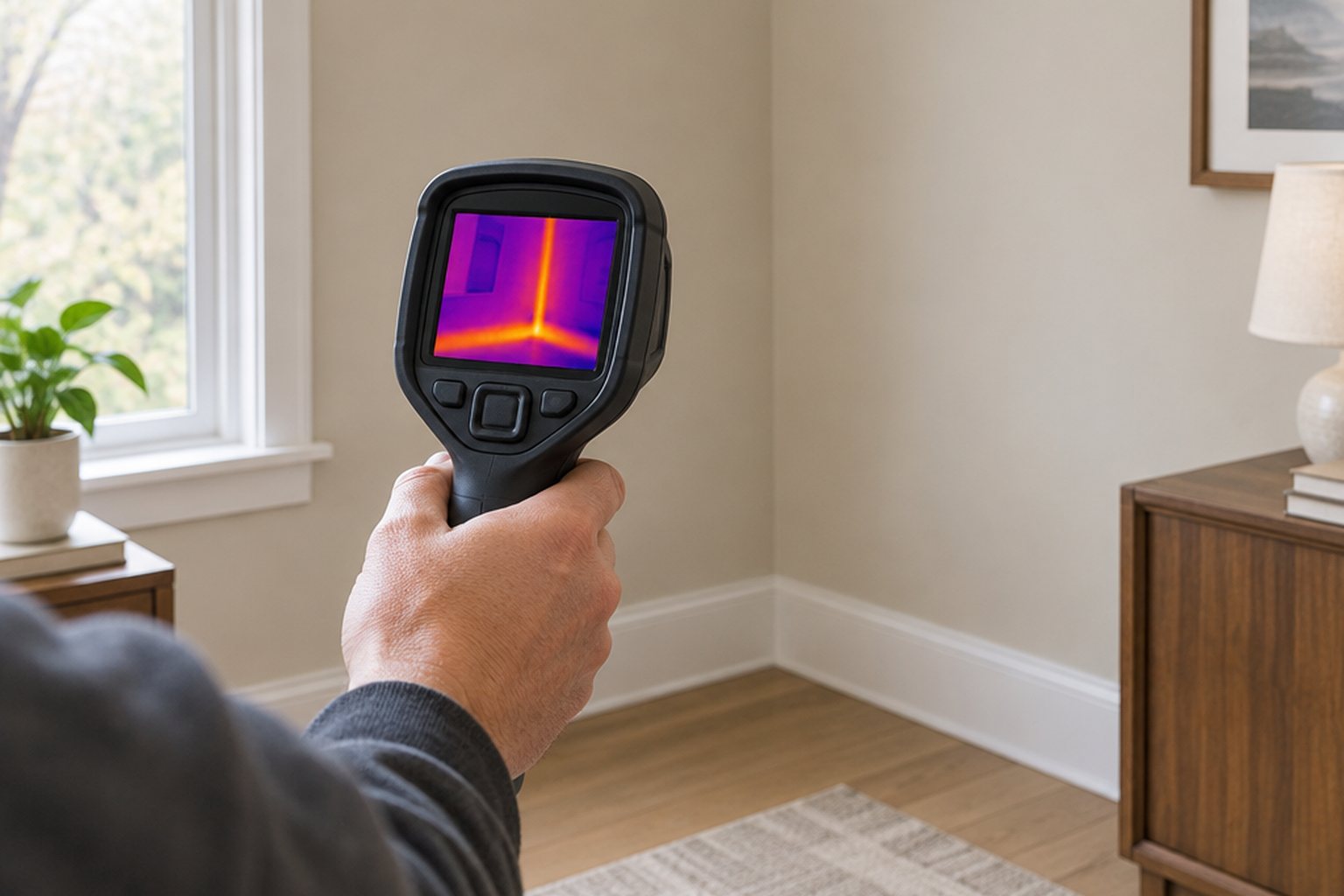
Thermal imaging displays surface-temperature information. Moisture can influence that pattern, but so can airflow, insulation gaps, structural framing, sunlight and nearby equipment. A blue or purple area is not a universal label for water; colors depend on the camera's display settings and the range represented. Ask for an explanation that refers to temperatures and context rather than color alone.
FLIR's water-leak imaging explanation describes the distinction between detecting temperature differences and directly seeing moisture. That limitation is central to a useful inspection. The camera can narrow where an investigator looks, but it cannot independently identify every wet material, trace every water path or establish that a wall cavity is free of damage.
Match the inspection timing to the question
An active leak and an old dry stain may produce very different results. Recent rainfall, heating or cooling operation, solar exposure and changing outdoor temperatures affect surface patterns. Tell the inspector when the symptom occurred and what conditions preceded it. If possible, provide photographs from the event rather than expecting the camera to reconstruct an unknown history.
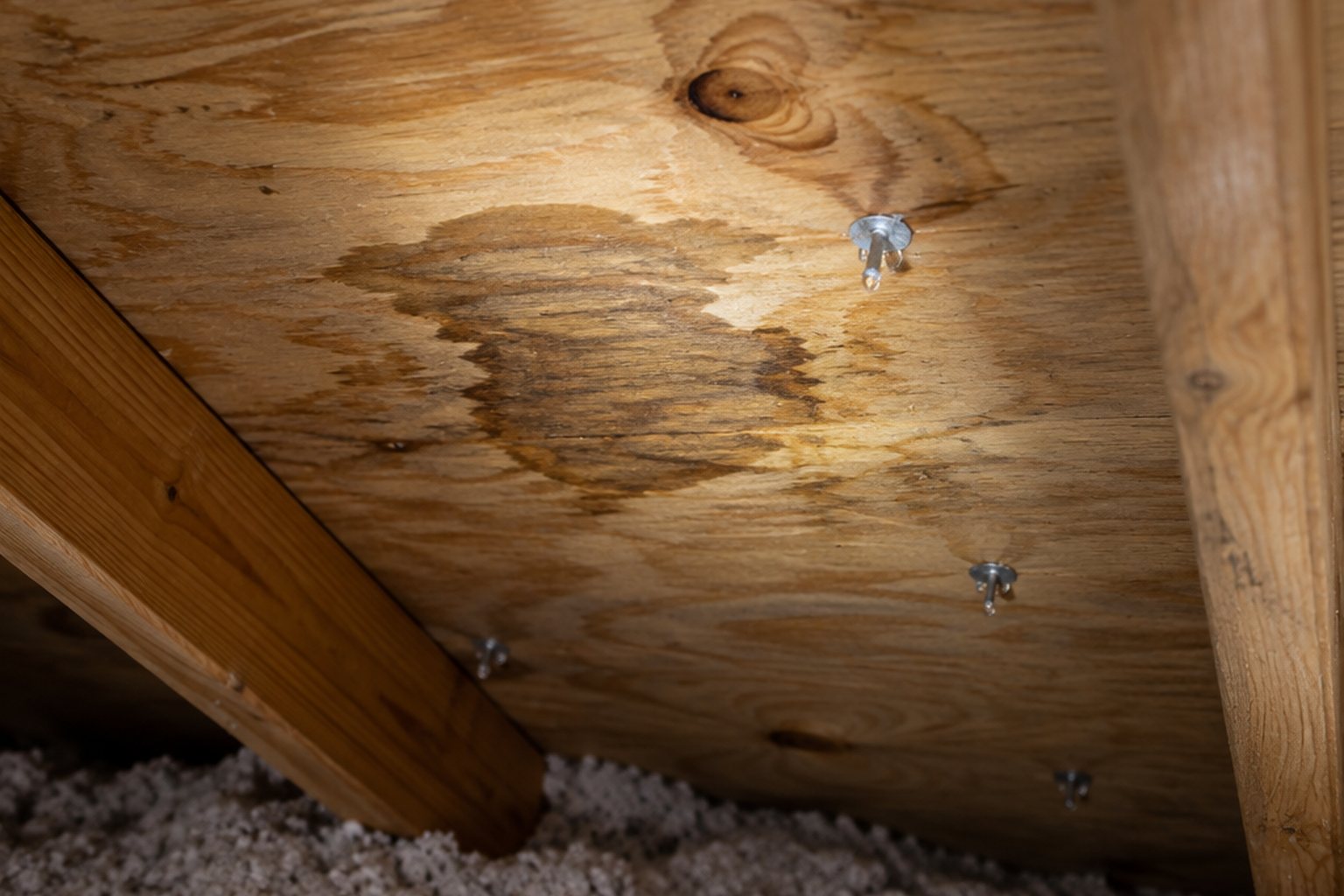
In the researched discussion, an owner wanted thermal imaging after a concealed roof leak had already caused damage. The practical question was whether remaining moisture could be located. An inspection under unsuitable conditions might miss it, while an anomaly could reflect something else. A useful report therefore states the observation conditions and what they allow the inspector to conclude.
Separate screening from confirmation
Use the image to identify areas for closer examination, then corroborate with a method appropriate to the material and assembly. That may involve a moisture meter, accessible inspection or professionally planned selective opening. The sequence should be driven by the question being tested. Repeatedly scanning the same wall does not turn an uncertain pattern into a confirmed diagnosis.
The Klein ET140 manual illustrates why the confirmation tool also has limits: material modes and relative scales matter. One instrument's drywall display is not a universal percentage of water in the wall. Ask the investigator to record the model, setting, location and comparison area so the supporting measurement is interpretable rather than another unexplained colored graphic or number.
Recognize common misleading patterns
Framing members can create regular temperature differences through a wall. Air leakage can cool an area without a plumbing leak. Recent sun on an exterior wall can complicate comparisons, and reflective surfaces can produce misleading apparent temperatures. Furniture and coverings also alter what the camera can observe. These conditions need interpretation, not automatic repair recommendations.
A hypothetical cold stripe aligned with every stud is a different pattern from irregular wetting that follows a recent leak. Neither can be diagnosed safely from color alone. Ask what alternative explanation was considered and what observation rules it out. An inspector willing to state uncertainty is providing more useful information than one who labels every cool patch water damage.
Do not confuse a negative scan with clearance
The absence of a visible anomaly does not prove an assembly is dry or undamaged. Moisture may be too deep, insufficiently different in temperature or outside the scanned area. Past wetting may have dried while leaving deteriorated materials behind. A thermal survey therefore has a defined observation scope, not an unlimited ability to certify hidden construction.
Ask how the investigator handles a persistent symptom with a negative scan. The next step may be checking the source, using another measurement or planning selective access. It should not automatically be a declaration that the owner imagined the problem. Similarly, a scan cannot certify that mold is absent; mold assessment involves different questions about moisture, materials and exposure.
Decide whether buying a camera answers your need
A camera can be useful for repeated observations, but buying one does not supply the training or complementary measurements needed for a building diagnosis. Compare the cost and expected use with a qualified inspection that includes interpretation and a report. The decision depends on your actual task rather than a promise that the device will find every leak.
The DOE consumer air-sealing guide places thermal imaging within a broader assessment approach. That is a sensible purchasing perspective too. If the goal is diagnosing a single concealed leak, access, source knowledge and moisture confirmation may matter more than a higher-resolution image. If the goal is learning about recurring thermal patterns, the device can be informative while still leaving important conclusions to a professional.
Specify the report you expect
Request visible-light photographs alongside thermal images, with locations identified clearly enough to find again. The report should state the suspected issue, relevant conditions, supporting measurements and limitations. Ask whether the inspector is identifying a likely moisture area, a confirmed wet material or a proven leak source; these are different levels of evidence.
Before destructive investigation, agree on why a particular opening is justified and who restores it. A dramatic image should not become permission for indiscriminate demolition. The record should connect the proposed access to a specific unresolved question and explain how the result will change the repair scope. This makes thermal imaging part of an efficient investigation rather than an expensive visual accessory.
Use repeat observations carefully after repair
After source correction and drying, repeat imaging may help compare patterns if conditions are reasonably comparable. Document changes in weather, HVAC operation and camera setup. Without that context, a different image may reflect different conditions rather than successful drying. Pair the follow-up with the relevant material checks and repair documentation.
Keep both the original evidence and the final findings. A successful investigation ends with a supported explanation and an appropriate repair or monitoring plan, not simply a more uniform thermal picture. If uncertainty remains, state what could not be inspected and what future symptom should trigger another look. That bounded conclusion is more reliable than claiming the camera has cleared everything behind the wall.
BEFORE YOU PROCEED
Your project checklist
- Define the inspection question and record recent leak conditions.
- Request explanations based on surface temperatures rather than colors.
- Confirm anomalies with suitable material-specific observations.
- Document instrument models, settings and comparison locations.
- Require visible-light photographs and clearly stated limitations.
- Compare follow-up results only with relevant conditions recorded.
Questions that come up next
Can a thermal camera see a pipe leaking inside a wall?
It may reveal a surface-temperature pattern associated with the leak, but it does not directly see through the wall. Confirmation and source investigation are still necessary.
Does a normal thermal image prove the wall is dry?
No. Depth, temperature conditions, timing and access can conceal a moisture problem from the camera. A negative scan must be interpreted within the scope of the investigation.
EVIDENCE & SCOPE
Sources for this guide
Applies to: United States homeowner education. Climate, existing assembly, manufacturer instructions and locally adopted requirements govern project details; no nationwide code threshold is asserted.
Reddit discussions identify questions and experiences, not verified diagnoses or code requirements. Technical claims should be read with the linked primary source, product instructions and local requirements.
- How To Detect a Water Leak with Thermal Imagingmanufacturer
Thermal temperature patterns and verification with moisture measurements.
- ET140 Pinless Moisture Meter Instruction Manualmanufacturer
Material modes, measurement depth and relative drywall/masonry scale.
- Consumer Guide to Air Sealing the Homegovernment
Assessment, prioritization, blower-door and thermal-image use, air-leak locations. DOE consumer guide published in 2021.
- Using FLIR for leak finding?reddit
An anonymized homeowner question that informed the article. Retrieved through search excerpts; anecdotal evidence, not a technical diagnosis.